
How to Rank on ChatGPT as a Balloon Artist in 2026
In This Post
- What How to Rank on ChatGPT Actually Means
- Why AI Assistants Name Some Balloon Artists and Skip Others
- How Your Pages Are Built Matters Almost as Much as What They Say
- Write Your Balloon Services Out in Plain Words, It Is the Easiest Win
- Saying Where You Work Is the Fix Most Balloon Artists Miss
- Making Your Balloon Business Easy to Verify Pays Off Everywhere
- FAQs About How to Rank on ChatGPT as a Balloon Artist
More balloon artists are asking me how to rank on ChatGPT than how to show up on Google right now, and the shift is real: BrightLocal’s 2026 research found AI tools now handle 45 percent of local recommendation searches, up from just 6 percent the year before.
Ranking well on Google still matters here. AirOps found the top Google result gets cited by ChatGPT 58.4 percent of the time, compared to just 14.2 percent for a page sitting in position 10, and pages holding the number one spot get cited 3.5 times more often than pages outside the top 20. ChatGPT treats a strong Google ranking as one of its biggest trust signals.
Key Takeaways
- How to rank on ChatGPT is really a question about being easy to read, easy to verify, and easy to quote.
- AI assistants lean on written pages they can crawl and cite, so an Instagram grid gives them very little to work with.
- Naming your services and your service area in plain words does most of the heavy lifting.
- The same work that helps here tends to help your local search visibility too, which is a lovely bonus.
What How to Rank on ChatGPT Actually Means
When a balloon artist searches how to rank on ChatGPT, what they usually picture is a leaderboard. There is not one. ChatGPT pulls together an answer in the moment, and the businesses it names are the ones it can find clear, confident, well organized information about.
So the goal shifts. Instead of chasing a position, you are trying to be the obvious, easy answer when someone types “who does balloon installations in Clearwater” into an AI assistant. That gives you a genuine shot at being referenced, and never a guarantee, which is true of anything honest about search.
The good news is the work is not mysterious. It is mostly writing things down properly on your own website.
Why AI Assistants Name Some Balloon Artists and Skip Others
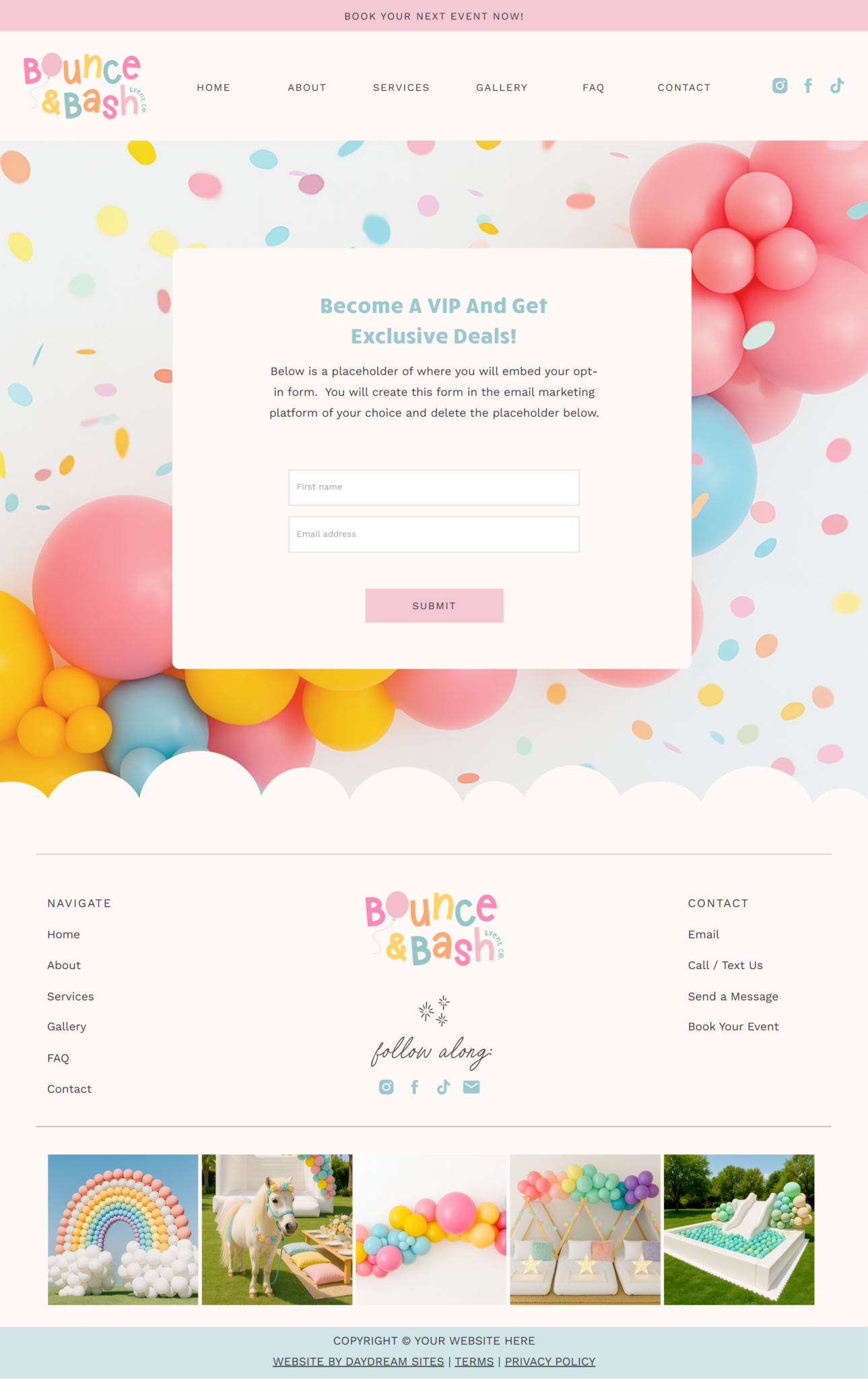
Here is the opinion I will happily defend: a big Instagram following does not replace a website, and AI search has made that more true, not less. Assistants lean on text they can read and cite out on the open web, and a grid of gorgeous garland photos gives them almost nothing to quote.
My clients have booked Nike, Sephora, Netflix, Amazon, Microsoft, and NFL, MLB, and NCAA teams. Not one came from a follower count. They came from being findable and readable when a buyer went looking.
That is the real answer to how to rank on ChatGPT. Be the balloon business with actual sentences on actual pages, saying exactly what you do and where you do it.
How Your Pages Are Built Matters Almost as Much as What They Say
There is a second layer to this that most balloon artists never see, since it lives in the code, not the page itself. It is not just what your words say, it is whether they are actually built as real, readable content, or trapped somewhere a crawler cannot get to.
- Headings need to be coded as real headings (H2, H3), not just bold, bigger text made to look like one. A real heading gives your page an outline a crawler can follow.
- Your service names, your city, and your answers need to live in actual text on the page. Words baked into a graphic or a PDF are invisible to anything reading your site.
- Short, one-idea paragraphs travel better than long ones, since an assistant tends to pull a section at a time rather than a whole page.
Google’s own guide to optimizing for generative AI search backs this up directly. Google says you do not need special AI files or exotic markup, but it does say a clear technical structure with real headings and readable paragraphs is worth doing well, since that is still how its systems find and process your pages.
This matters even more for the assistants that are not Google, since ChatGPT and Perplexity run their own crawlers and do not simply hand back Google’s results. Research from Ahrefs found that only about 12 percent of the pages cited by AI assistants also appeared in Google’s own top 10 for that same question. Ranking on Google and getting cited by ChatGPT are related, but they are not the same game, and clean structure is one of the few things that helps with both.
One more honest update: Google retired the FAQ rich result, the expandable box that used to show under a Google listing, as of May 2026, so your FAQ section will not get that box there anymore. It is still worth writing, though, since plain, clearly labeled questions and answers are exactly the kind of content AI assistants pull from when they are putting an answer together.
Write Your Balloon Services Out in Plain Words, It Is the Easiest Win
If you only do one thing from this whole post about how to rank on ChatGPT, make it this one. Cute service names are lovely on a price sheet, and they are a problem when they are the only words on the page.
If your services page says “The Showstopper” and nothing else, there is nothing for an assistant to match against a question about balloon garlands or a corporate install. What works is saying the plain thing first, then letting your brand voice have its fun right after it.
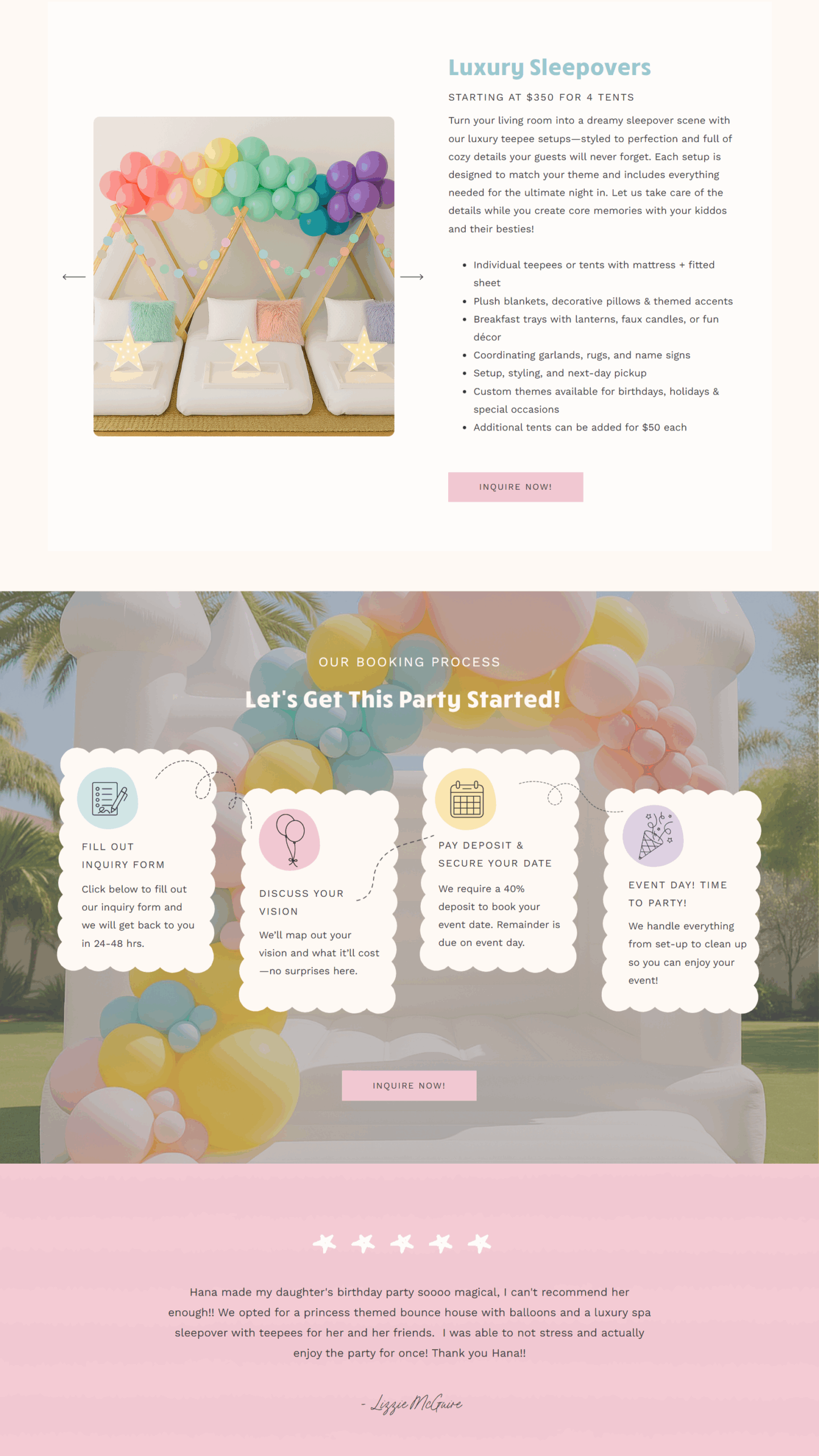
- Naming the service the way a buyer would say it helps: balloon garland, organic arch, grab and go balloons, corporate installation, marquee letters.
- Two or three real sentences under each one, about what is included and who it suits, is plenty.
- Add an FAQ block in your own words, since question and answer formatting is genuinely easy for an assistant to lift.
The services section below does exactly that. It names the offer, describes what comes with it, and walks through booking in order, which both people and assistants can follow.
Saying Where You Work Is the Fix Most Balloon Artists Miss
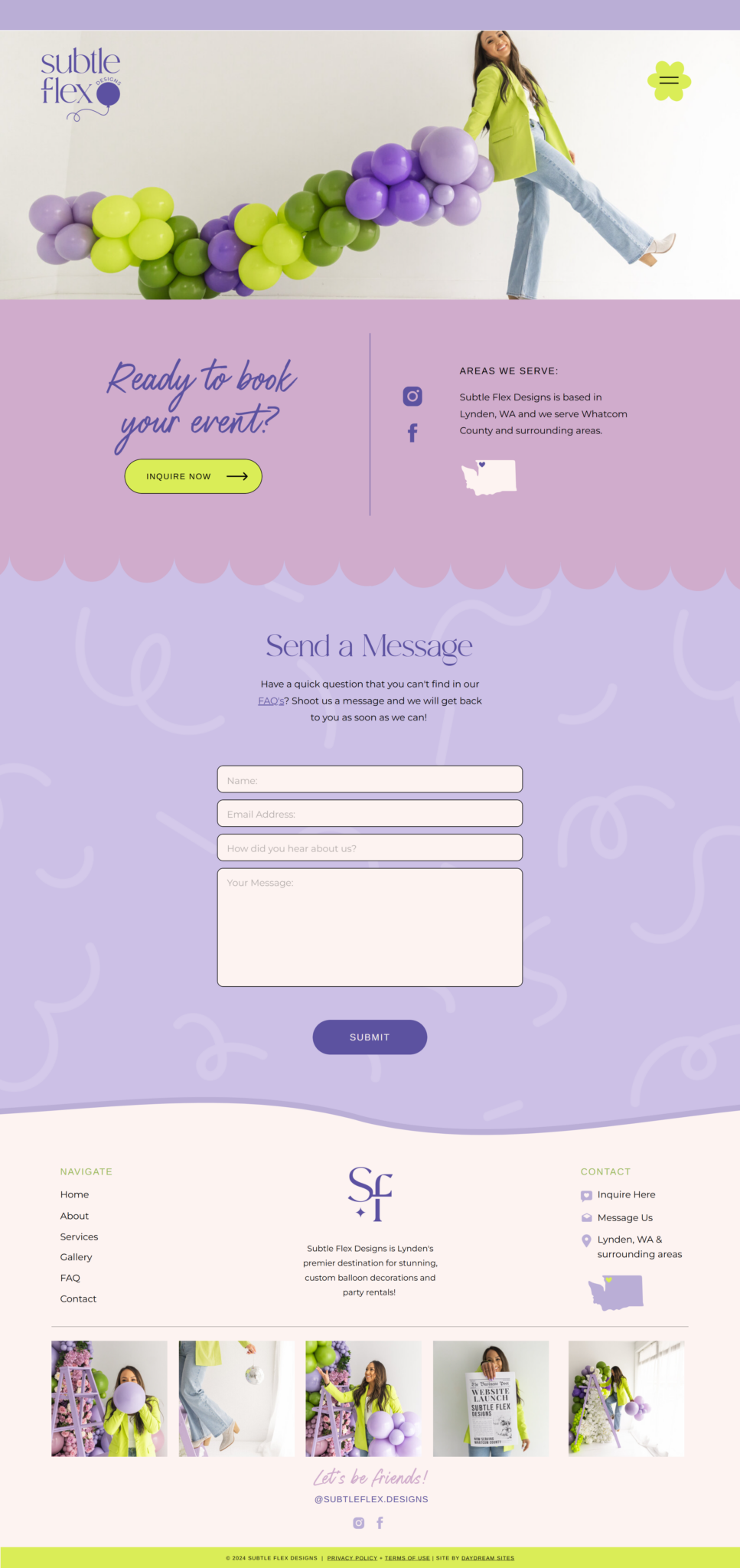
Location is where I see balloon businesses quietly lose out, and it is such a fixable thing. Your city needs to appear in real sentences on your home page, your services page, and your contact page, not only in a form field.
Google names relevance, distance, and prominence as what it weighs for local results, and you can read that straight from Google’s own local ranking guidance. Assistants are working with a similar picture of who you are and where you are.
I had a client come to me for the SEO Accelerator wondering why she was invisible locally. Her Showit template still said “based in San Francisco” on several pages, and she was nowhere near California! After we fixed that and worked through the rest of the scope, she reached the top spot in organic search for her terms, started showing up in the local map pack, and began getting named when ChatGPT was asked for recommendations in her area.
One leftover line from a template was doing all that damage, so it is worth reading your own pages out loud.
Making Your Balloon Business Easy to Verify Pays Off Everywhere
Assistants get more confident about naming you when the same story shows up in more than one place. Your business name, city, and services should read the same on your website, your Google Business Profile, and anywhere else you are listed.
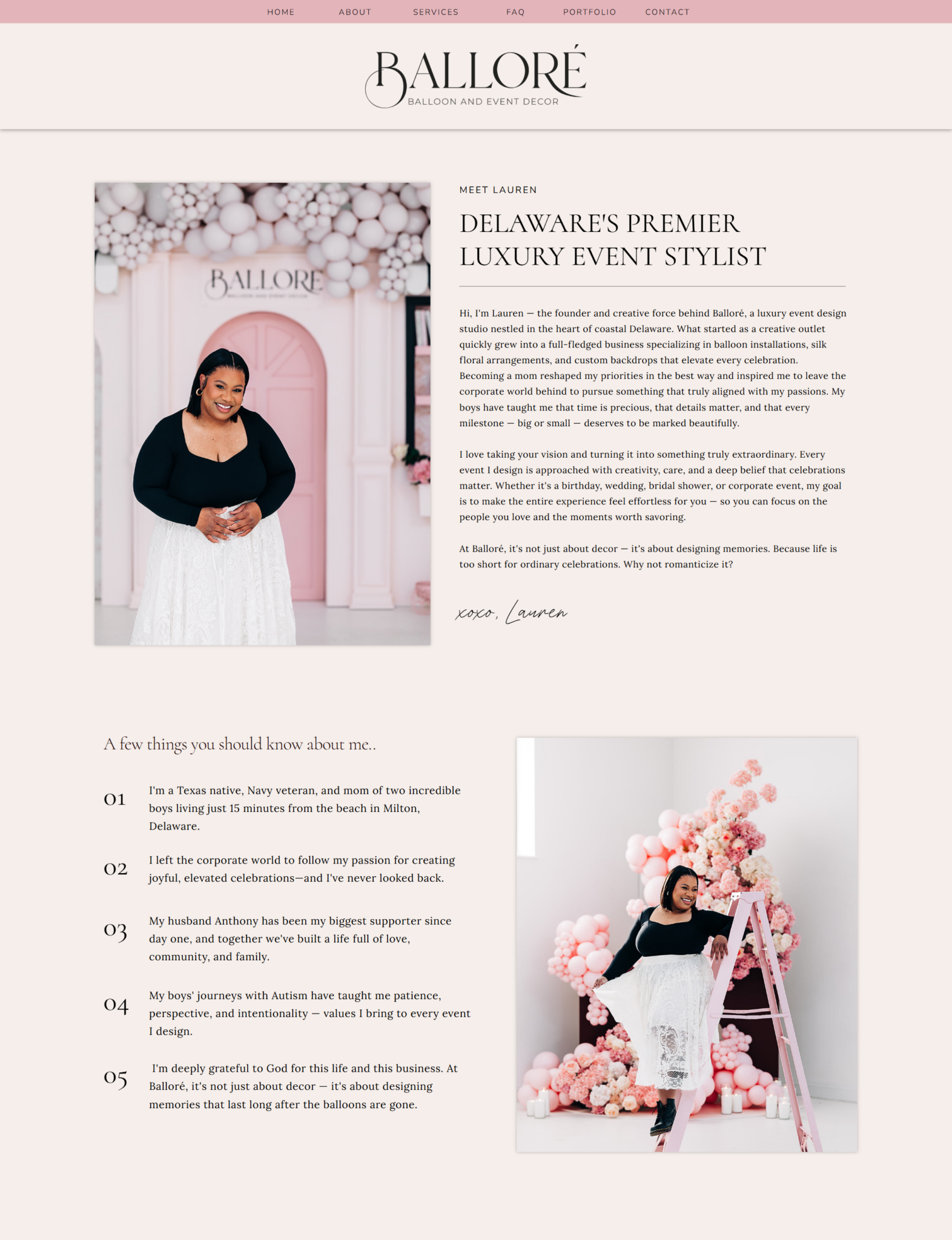
A real About page helps more than people expect, because it is often the only page that says who you are in full sentences. It is worth including your name, your city, how long you have been installing, and the kind of work you take on, so nobody has to guess.
None of this is technical, which is the part I love telling people. How to rank on ChatGPT comes down to being consistent about who you are.
Platform matters here too, and I build on Showit for a specific reason. The design freedom is total, and it connects straight to WordPress for blogging, which is where this quotable content lives.
If you would rather start on your own, The Party Planner and the rest of the template shop already have these pages built in. If you would rather hand it over, the SEO Accelerator is the one week, done for you version, and it is included in Website in a Week, the Signature Offer, and the Custom Website package.
One last note on pace. Real foundations take months to mature, and that is the good news, because it means once this is working for you, the people who skipped the work cannot catch up overnight.
FAQs About How to Rank on ChatGPT as a Balloon Artist
Can you guarantee ChatGPT will recommend my balloon business?
No, and anyone who says otherwise is overpromising. AI tools tend to reference clear, well structured, authoritative content, so strong pages give you a real shot at being named.
Is how to rank on ChatGPT different from ranking on Google?
The mechanics differ, but the prep work overlaps a lot. Clear service pages, honest location wording, and a tidy Google Business Profile help both, so I never treat them as separate projects.
Do I need a blog for this?
Only if you keep it going. The research is consistent on one thing more than any specific number: sites that stop publishing tend to plateau or lose ground, while a steady pace, even monthly, tends to hold or build. If your business is highly visual, a well-tagged, consistently posted professional Instagram account is not a consolation prize either, since Google has indexed public posts, captions, and alt text from those accounts directly into search results since July 2025.
Will this work if my site is on Wix or Squarespace?
Yes, those platforms can rank perfectly well, so please do not panic about that. I prefer Showit for the design freedom and the WordPress blog connection, which is a preference rather than a knock on anything else.
If you have read this far, you are exactly the balloon artist this work pays off for: someone who wants to be found on purpose, and who gets that a real foundation keeps earning long after launch day. When you are ready to build a site that AI assistants and buyers can both make sense of, let’s work together.
You can also follow along on Instagram @daydreamsites, where I share builds in progress and the small website fixes that make the biggest difference.
I cannot wait to see your balloon business get the credit it deserves!
View comments
+ Leave a comment
|