
What Should Be on a Balloon Artist Website? (A Complete Guide)
- Your homepage must immediately tell visitors what you do and where you work
- A gallery of your best balloon work is the most powerful page on your site
- Local SEO connects you with clients in your area who are ready to book
- Showit is the best website platform for balloon artists who want a beautiful, high-converting site
- Why Your Balloon Artist Website Matters More Than You Think
- What Should Be on Your Balloon Artist Homepage?
- The Gallery: Your Most Important Page
- Services Page: How to Present Your Balloon Offerings
- How to Get Found on Google as a Balloon Artist
- The Best Website Platform for Balloon Artists
- Frequently Asked Questions
Your balloon artist website needs five essential things: a clear homepage that explains what you do and where you serve, a gallery of your best work, a services page with pricing information, a contact or inquiry form, and SEO so local clients can actually find you. Without all five, even the most beautiful site will struggle to convert visitors into booked clients.
Here is exactly what to put on each page, why it matters, and which platform will make your balloon business look as good online as it does in person.
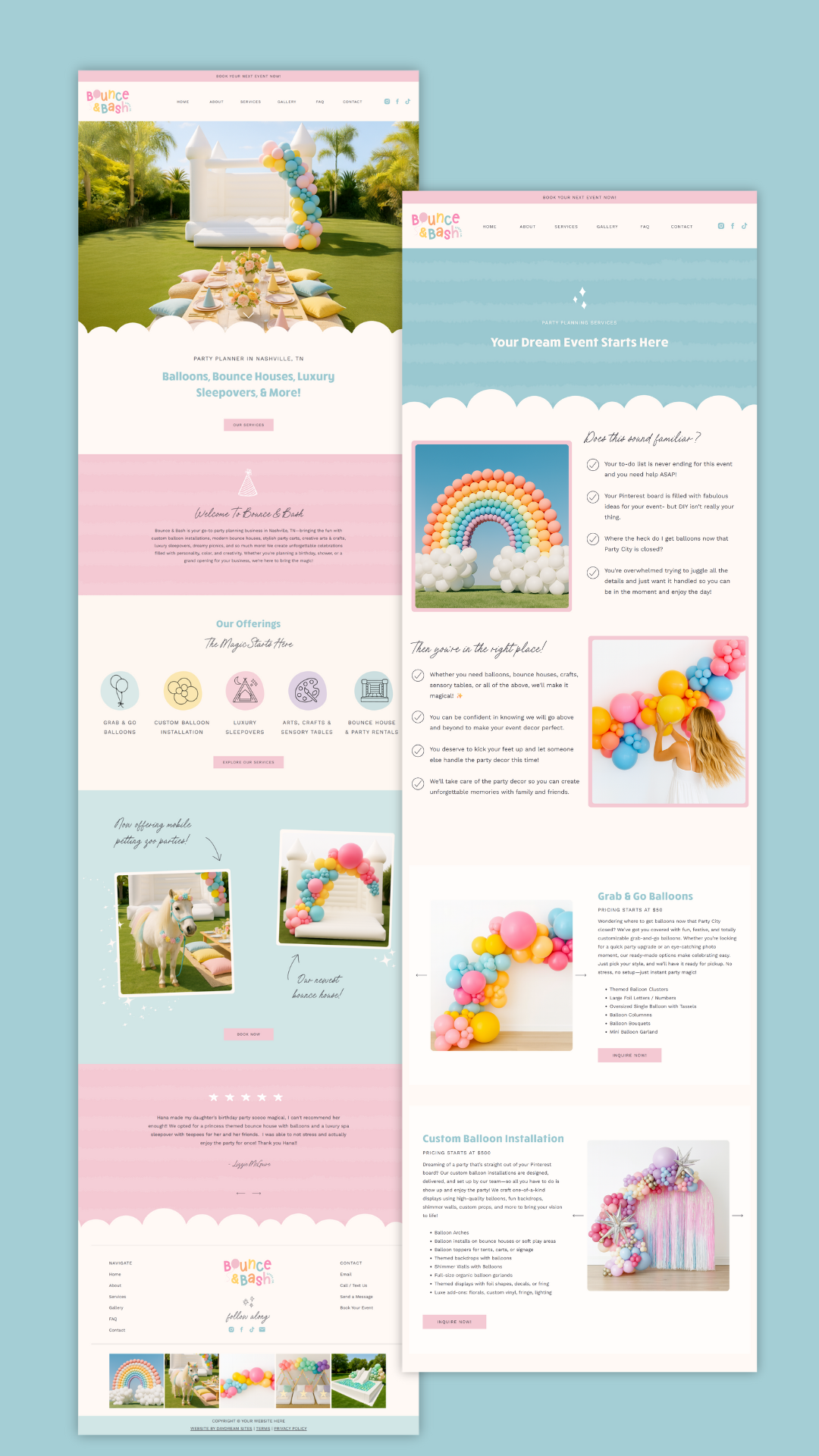
Why Your Balloon Artist Website Matters More Than You Think
Most balloon artists get their first clients through word of mouth. That is great — until you want to grow beyond your immediate network. A strong website is what makes that growth possible.
When someone searches “balloon artist near me” or “balloon decorations for birthday party,” they are ready to book. If your website shows up and looks professional, you are already ahead of 90% of your competition.
Your website also works around the clock. While you are setting up for an event, your site is answering questions, showcasing your work, and collecting inquiry forms from future clients.
What Should Be on Your Balloon Artist Homepage?
Your homepage has one job: tell the right people they are in the right place and make them want to learn more. Here is what needs to be there.
A Clear, Direct Headline
Skip the clever tagline. Lead with who you help and what you do. Something like “Balloon Design for Weddings and Events in Austin, TX” tells visitors exactly what they need to know in under three seconds.
Your headline should include your city or region. This is one of the simplest local SEO wins you can make on a balloon artist website.
A Strong Hero Image
Your hero image is the first thing visitors see. Choose a photo that shows your best work — an organic balloon installation, a full arch, or a dramatic ceiling treatment. Make sure it loads fast and looks sharp on mobile.
A Single, Clear Call to Action
Do not give visitors five options. Give them one: “Get a Custom Quote” or “Book a Consultation.” A focused call to action dramatically increases the number of inquiries you receive.
Social Proof
Include two or three short client testimonials on your homepage. Quotes that mention a specific event type (“our wedding balloon arch”) or outcome (“I got so many compliments”) are far more convincing than generic praise.
A Brief About Section
A short paragraph about you and your business builds trust. Mention how long you have been creating balloon art, what types of events you specialize in, and why clients love working with you. Three to five sentences is enough on the homepage.
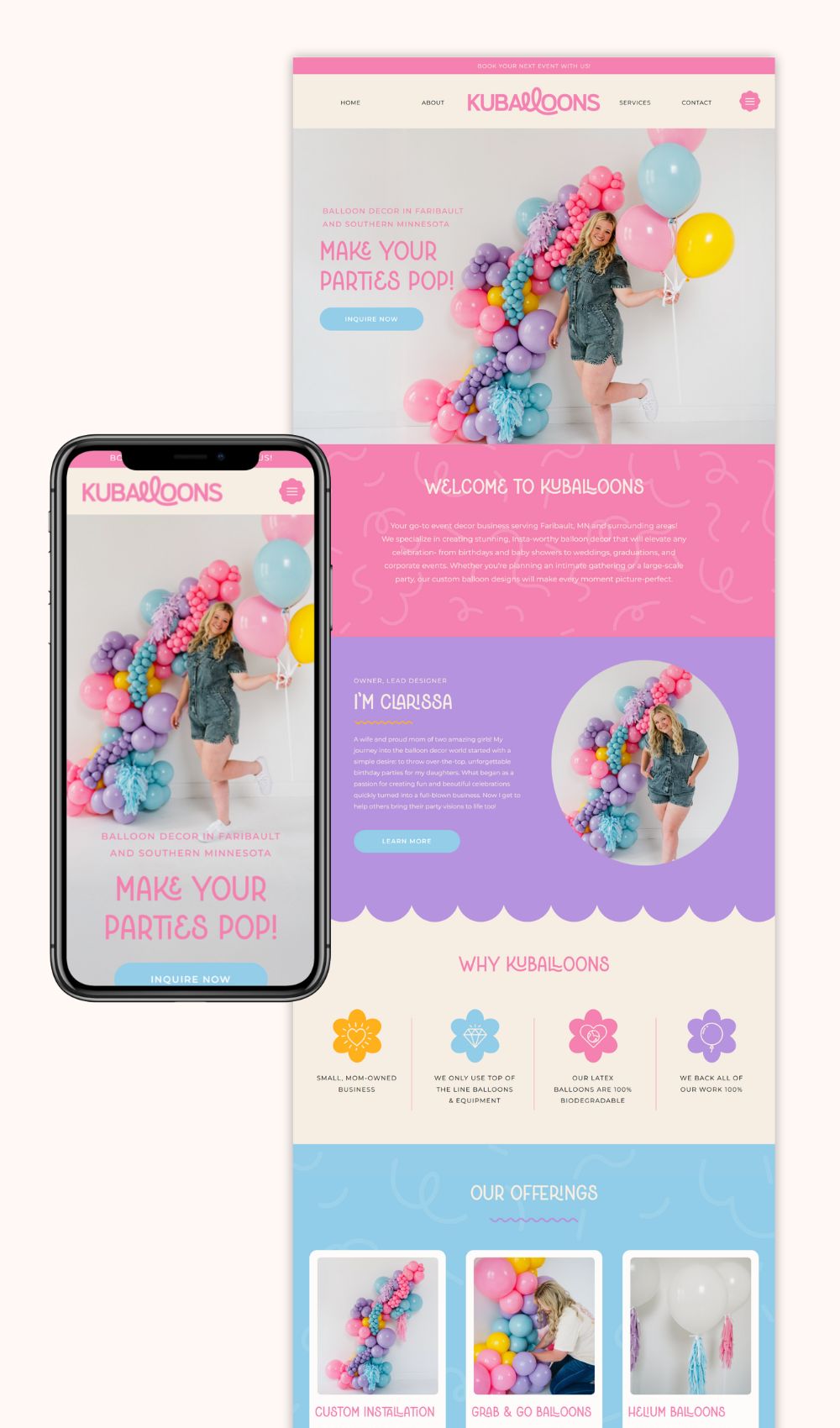
The Gallery: Your Most Important Page
For balloon artists, the gallery is everything. Clients are buying a visual experience, and your photos need to sell that experience before they ever talk to you.
Organize by Event Type
Instead of one long photo collection, organize your gallery by category: weddings, birthday parties, corporate events, baby showers. This helps clients quickly find work that matches their event and helps Google understand what you offer.
Show Your Range and Your Signature Style
Include a mix of organic installations, classic arches, and balloon columns. But also make sure your signature style comes through. If you specialize in earth-tone organic designs or bright color-pop party installs, let that show.
Use Vertical Images
Vertical images (taller than they are wide, around 2:3 ratio) look great on mobile and are ideal for sharing to Pinterest. Pinterest can be a significant traffic driver for balloon artists, so optimize your gallery images for it from the start.
Write Descriptive Alt Text
Every image needs alt text. Describe what is in the photo and naturally include your keywords. For example: “Pink and white organic balloon arch for a baby shower in Dallas, TX.” This is good for accessibility and great for SEO.
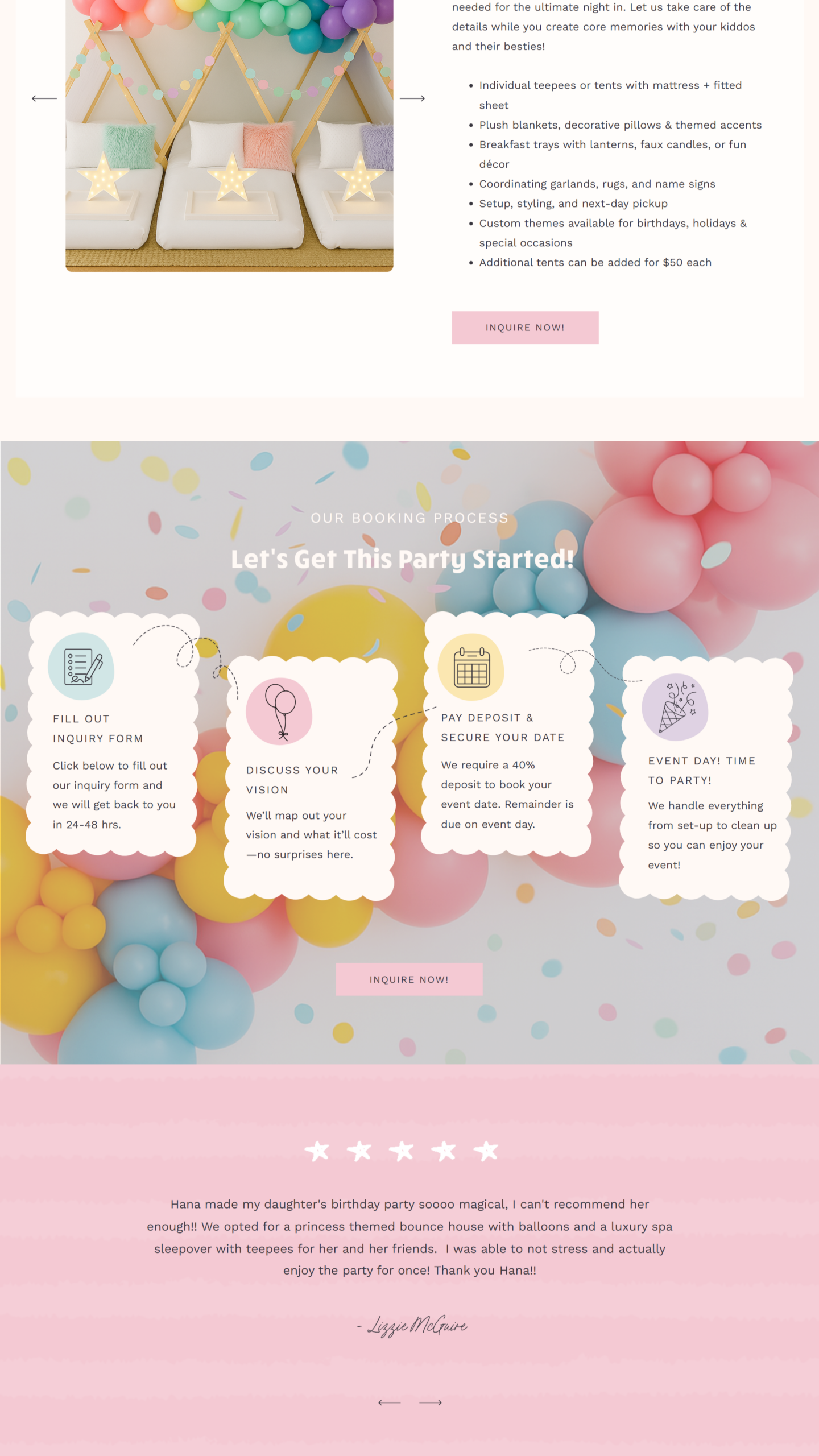
Services Page: How to Present Your Balloon Offerings
Your services page is where browsers become buyers. It needs to answer every question a potential client has before they decide whether to reach out.
List Your Services Clearly
Break your offerings into clear categories — for example, balloon arches, organic installations, table centrepieces, full-event styling, and balloon drops. Each category should have a short description and a photo of your work.
Include Starting Prices
A lot of balloon artists are nervous about publishing pricing. But hiding your rates wastes your time and the client’s. Include starting prices or price ranges. This filters out clients who cannot afford your services and attracts the ones who are ready to invest.
Describe Your Process
Outline your booking process in three to five steps: inquiry, consultation, design proposal, deposit, delivery and setup. Clients who know what to expect are far more likely to book.
Add a Booking CTA on Every Section
End every section with a link to your contact form or booking page. Do not make clients scroll back to the top to find out how to work with you.
How to Get Found on Google as a Balloon Artist
A beautiful website that nobody finds is a missed opportunity. SEO — search engine optimization — is what connects your site to the people searching for what you offer.
Focus on Local Keywords
Most balloon artist clients search locally. Target phrases like “balloon artist in [your city],” “balloon decorations for birthday party [city],” and “wedding balloon arch [city].” Include these naturally throughout your site copy, especially in your headings and page titles.
Set Up Google Business Profile
Your Google Business Profile is free and powerful. It helps you show up in map results when someone searches for balloon artists near them. Add photos regularly, collect reviews, and keep your contact info up to date.
Create Helpful Blog Content
Google rewards websites that consistently publish useful, relevant content. A blog with posts like “How much does a balloon arch cost?” or “What is organic balloon styling?” helps you rank for more search terms and positions you as the go-to expert in your area.
If you already have a website and want hands-on help getting it to rank, the SEO Accelerator is designed exactly for event industry businesses like yours. Getting a new site? The SEO Accelerator is included in Website in a Week.
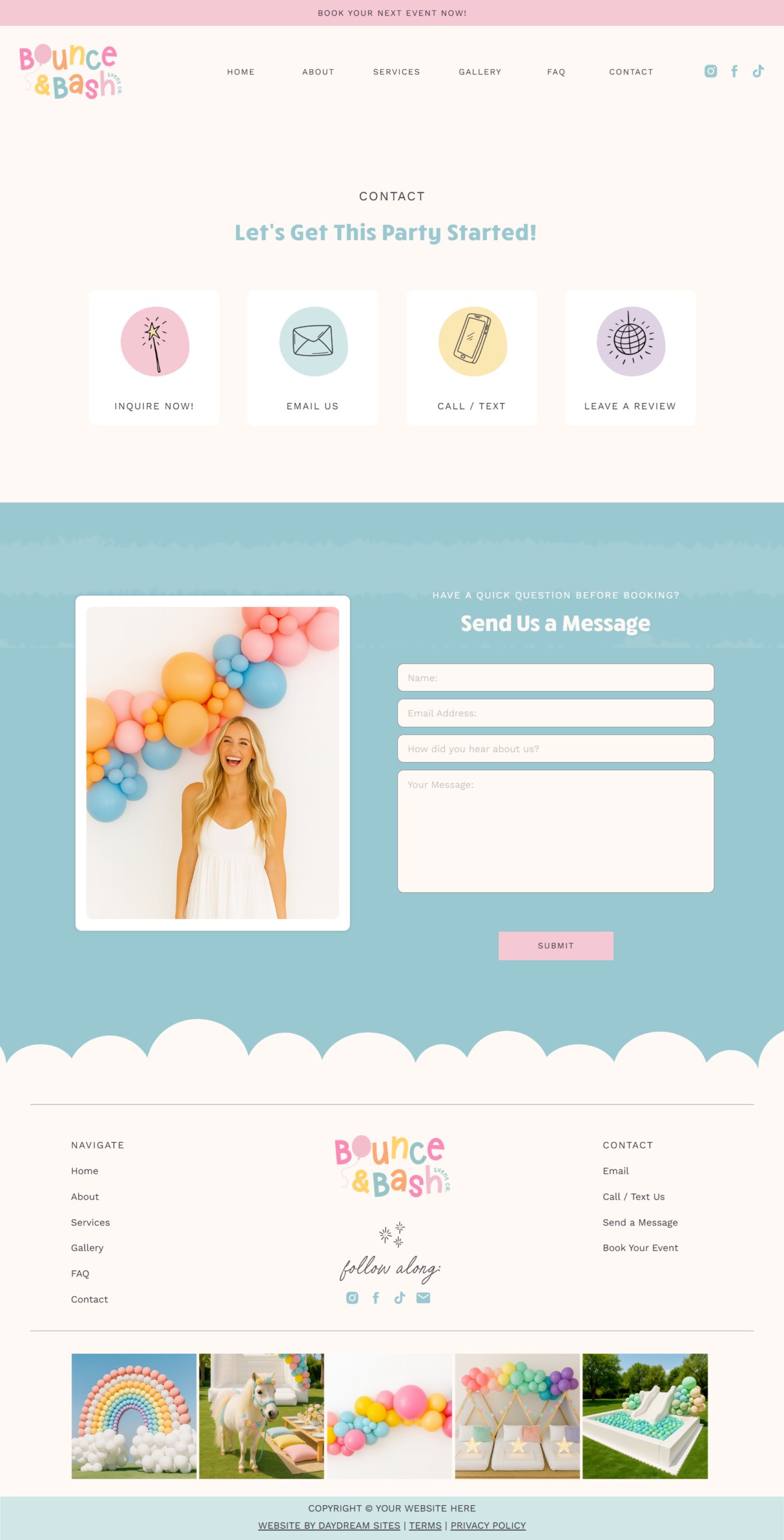
The Best Website Platform for Balloon Artists
Not all website platforms are created equal. For balloon artists and other visual event professionals, the platform you choose affects how your site looks, how fast it loads, and how easy it is to update.
Why Showit Is the Best Choice
Showit is a drag-and-drop website builder designed for creative businesses. It gives you total design freedom without needing to know any code. Your site can look exactly the way you want it to — with custom fonts, layouts, and animations that reflect your brand.
Showit also integrates with WordPress for blogging, which means you get the design flexibility of Showit plus the SEO power of WordPress. That combination is hard to beat for an event industry website.
Showit Templates for Balloon Artists
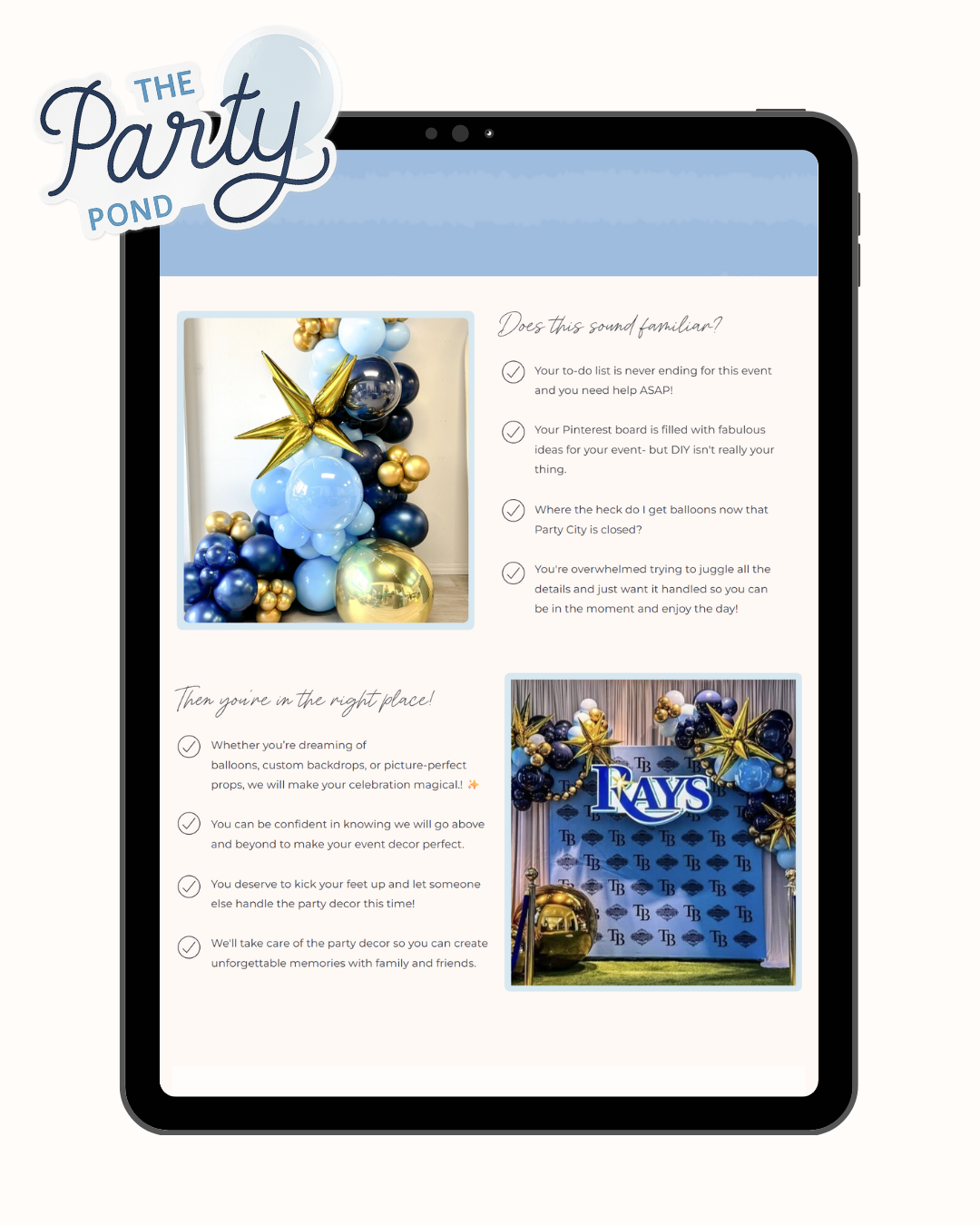
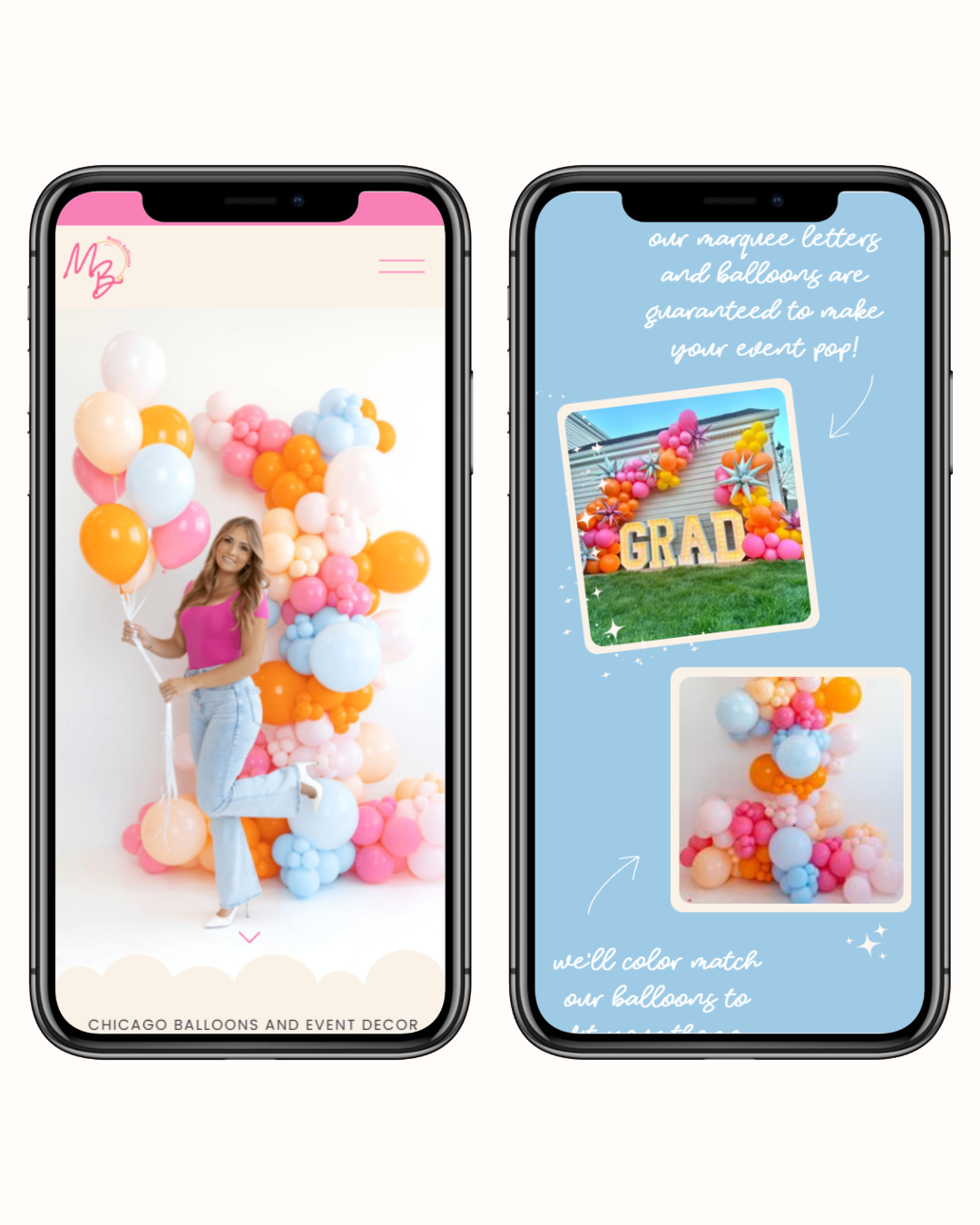
If you want a professionally designed balloon artist website without starting from scratch, a Showit template is the fastest path. The Party Planner, Event Planner, and Bright and Happy templates at Daydream Sites were all designed for balloon artists, event planners, and creative event pros. Each includes a gallery layout built for visual portfolios, a services page structure, and a homepage designed to convert visitors into inquiries.
Browse all templates and find the one that fits your brand.
Want Your Template Customized for Your Business?
The Website in a Week service is the perfect middle ground. You pick a template from the Daydream Sites shop as your starting point, and Kathryn customizes it to your brand, your services, and your market — plus the full SEO Accelerator so you are set up to rank from day one. Payment plans are available.
Frequently Asked Questions
How many pages does a balloon artist website need?
At minimum, you need a homepage, gallery, services page, about page, and contact page. You can add a blog later to boost your SEO and bring in more organic traffic over time.
Should I show prices on my balloon artist website?
Yes. Publishing starting prices helps filter inquiries and saves you time. Clients who reach out already know what to expect, which makes the conversation much easier and leads to better-fit bookings.
Do I need a blog on my balloon artist website?
You do not need one to launch, but you should add one as soon as possible. Blogging is one of the most effective ways to improve your Google rankings and bring in steady traffic over time without paying for ads.
Can I use Squarespace or Wix for my balloon artist website?
You can, but there are real tradeoffs. Squarespace and Wix are more limited in design flexibility than Showit. If your brand is visual and you want your site to stand out, Showit gives you far more control over the final look and feel.
How do I get more inquiries from my balloon artist website?
Make sure your contact form is easy to find (link to it from every page), include your location prominently, and show exactly the style of work you want to do more of. Testimonials and real client photos also make a significant difference in conversion rates.
Your balloon artist website is your most powerful marketing tool. Get the foundation right — clear messaging, a stunning gallery, proper SEO — and it will bring in new clients consistently.
Ready to build a website that actually works? Browse the templates or learn about Website in a Week to get started. Follow along for more tips at @daydreamsites on Instagram.
If any of this sounded like your business, that is a good sign. It means you already know what needs to change, and that is genuinely the hardest part. When you want it done properly and off your plate, let’s work together. You can also follow along on Instagram @daydreamsites, where I share client launches and behind the scenes. I would love to build yours!
View comments
+ Leave a comment
|