
Event Planner Website Design: What the Best Sites Have That Yours Doesn’t
In This Post
In this post:
If your event planner website design isn’t bringing in inquiries, the problem is usually one of three things: wrong pages, weak SEO, or copy written for the wrong audience. The best event planner websites are clear, fast, and built to rank, not just look good on a browser tab no one opens.
Key Takeaways
- High-converting event planner sites need clear, thorough content: home, services, portfolio, about, and contact, each one written specifically, not thin
- Corporate clients and brand partners find vendors on Google, not Instagram
- Your copy should speak to the person signing the contract, not the host planning a birthday party
- A Showit template can work, but only if it was built with SEO in mind from the start
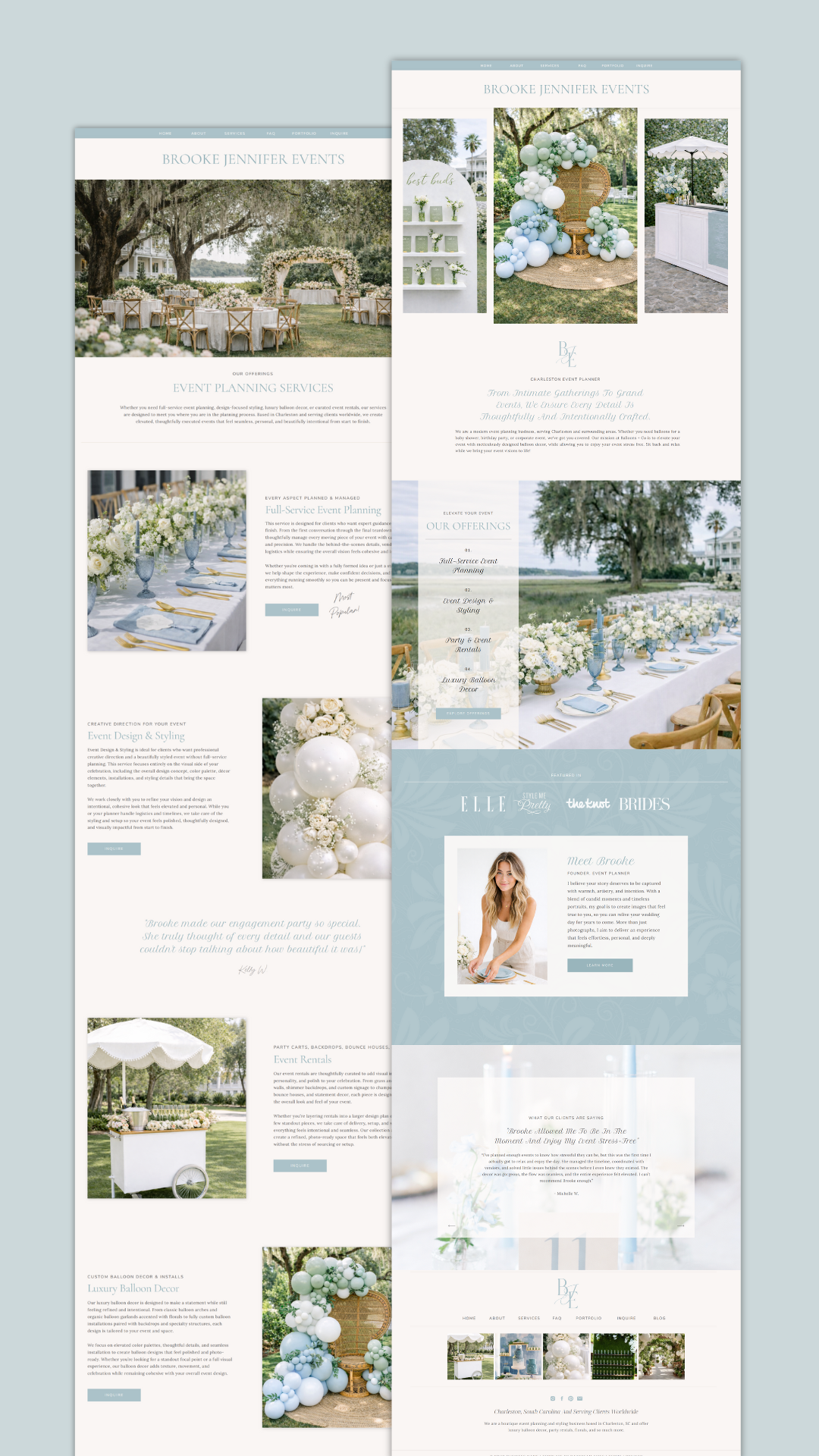
What Clients Actually Look For on an Event Planner Website
When someone lands on your site, they’re not reading every word. They’re scanning fast, looking for three things: whether you do what they need, whether you look like you can handle the scale of their event, and whether there’s an easy path to reach you.
Most event planner websites fail on point two. They show photos from small birthday parties when the prospective client is planning a 500-person corporate gala. They list “full-service event planning” without any specifics that prove they’ve worked at that level. The portfolio is either empty or filled with photos so dark you can’t see the decor.
Here’s what the best event planner websites have that most sites don’t:
- Specific service descriptions that name event types, scale, and deliverables, not just “we do it all”
- A portfolio organized by event type, not just dumped into a date-ordered gallery grid
- Social proof from recognizable clients, whether that’s a corporate brand, a venue, or a nonprofit
- A contact form that asks the right questions so inquiries arrive pre-qualified
- A load speed under 3 seconds, because corporate event coordinators will not wait around
The Pages You Cannot Skip
There’s a short list of pages every event planner website needs to convert browsers into booked clients! Miss any one and you’re leaving inquiries on the table.
Homepage. Your first handshake. It needs to answer three questions in the first screen a visitor sees: what do you do, who do you do it for, and where are you based. If someone has to scroll to discover you’re a corporate event planner in Nashville, your homepage is working against you.
Services page. This is where vague copy kills bookings. The best services pages are specific about what’s included, who the service is right for, and what the investment looks like, even if just a starting price. “Custom event design packages available” tells a buyer nothing. “Corporate brand activations starting at $5,000” tells them everything they need to decide whether to reach out.
Portfolio page. Organized by event type, not uploaded in date order. If your best corporate work is buried behind photos from a backyard baby shower from three years ago, reorganize it before your next potential corporate client shows up.
About page. Not a credentials list. A story that makes someone trust you before you’ve ever spoken. What kinds of events do you love to produce? Who do you do your best work for? What makes you different from the planner one city over?
Contact page. Clear and simple. A form that captures name, email, event date, event type, and estimated guest count is a solid starting point. Don’t make it 20 fields long or you’ll scare off good leads before they finish typing.
Genuinely local content. This is what most event planners skip entirely, and it’s one of the biggest reasons sites don’t rank locally. Real, specific writing about your city and the work you do there is how you show up when someone types a local search into Google. More on this below.
Why Google Finds You Clients Instagram Never Will
Here’s a real opinion worth sitting with: a big Instagram following is not a business pipeline.
When a marketing manager at a Fortune 500 company needs a planner for their annual client event, they’re not scrolling Reels. They’re typing “corporate event planner [city]” into Google, clicking the top three results, and scheduling calls. Instagram is a consumer discovery platform. Corporate clients use search.
Dreamsc8pe Event Co. launched her website about six months ago. She doesn’t have a massive following. But Nike reached out to book her because they found her on Google! Not through a referral. Not through an Instagram DM. Through a search.
The Party Pond had a similar experience. They booked major installations with the Tampa Bay Rays and the University of South Florida. Both organizations found her through Google! When an MLB team’s events coordinator is sourcing vendors, they are not browsing hashtags. They are searching.
This is what I mean when I say your website is your most important business asset. A 10,000-follower Instagram account does not book corporate contracts. A well-built, well-optimized website does.
What It Actually Takes to Rank in Search
Ranking on Google is not complicated, but it is specific. Here’s what goes into a site that shows up when a corporate event coordinator searches for a planner in your city:
- Your primary keyword in the right places. Your page title, your H1, at least one subheading, your meta description, and naturally throughout your body copy. “Event planner in [City]” should appear on your homepage more than once.
- A Google Business Profile that’s actually complete. Hours, service area, photos updated in the last 90 days, and recent reviews. This is what puts you in the map pack, the set of results most people click first.
- Genuine local content. Real, specific writing about the cities and service areas you want to rank in, wherever it lives on your site. Never copy-pasted text with just the city name swapped out, Google sees right through that.
- Fast load speed and clean structure. Google rewards sites that load quickly and are easy to crawl. Oversized images, broken links, and missing metadata all drag your ranking down.
- A real blogging platform. This is one of the reasons I build on Showit. Showit connects directly to WordPress, which means real blogging infrastructure, not just a journal page that search engines can’t read. For more on ranking in search, see the full guide: How to Get Your Event Planning Business to Show Up on Google.
If you want all of this handled in one focused week, the SEO Accelerator covers it: keyword research, metadata for 6 pages, image optimization, GBP audit, and competitor analysis. It’s a one-time investment, not an ongoing retainer.

DIY vs. Done-for-You: The Honest Answer
Not every event planner needs a custom website built from scratch. If you’re early in your business or working with a tighter budget, a well-designed template is a real and practical option. The key is picking one that was built with the right structure for your business, not just one that looks good in a screenshot.
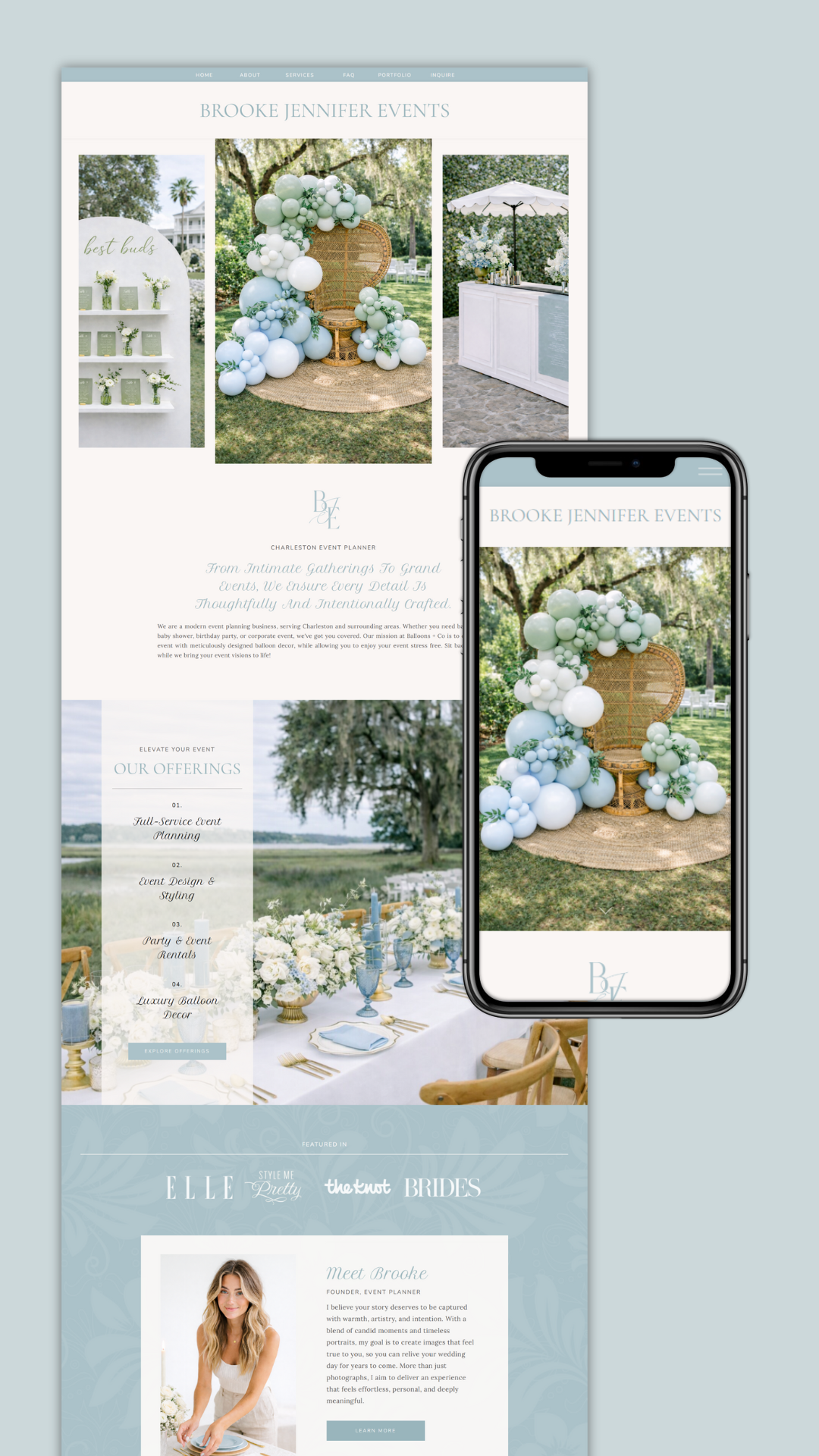
The Event Planner Showit template from Daydream Sites was designed specifically for event-based businesses. It includes the page structure, portfolio layout, and service pages you need to convert visitors into inquiries. It’s a DIY option with a done-for-you starting point. You can also browse the full Showit template shop to compare what’s available.
If you want someone to handle the full build, the Website in a Week package takes one of those templates and fully customizes it for your specific business. It includes the complete SEO Accelerator, so your site launches already optimized. You pick the template, everything else gets handled, and you’re live in under a week.
For established event planners who want something built entirely from scratch, the Custom Website package is a completely custom 6-page Showit build plus the full SEO Accelerator, no templates involved.
Who this is perfect for: event planners who want a site built with real strategy behind it, and who are excited to watch it climb. Real SEO foundations take a few months to mature, and that is genuinely the good news, because it means once you are ranking, the planners who skipped the work cannot catch you overnight!
Frequently Asked Questions About Event Planner Website Design
What should an event planner website include?
At minimum: a homepage that states who you are and where you work, a services page with specific descriptions, a portfolio organized by event type, an about page, and a contact form. Genuine, specific writing about where you work matters too if you want to rank in local search.
How many pages does an event planner website need?
Six pages is a solid starting point: Home, About, Services, Portfolio, Contact, and FAQ. Content that speaks specifically to event types like corporate, social, and nonprofit, wherever it lives on those pages, can strengthen your SEO significantly over time.
What is the best platform for event planner websites?
Showit is the best option for event planners who want design freedom and real SEO capability. It connects directly to WordPress for blogging, which is one of the most powerful long-term SEO tools available. Unlike Wix or Squarespace, Showit doesn’t lock you into rigid grid layouts, and the customer support is genuinely useful when you need it.
How long does it take for an event planner website to rank on Google?
Expect three to six months before you see consistent ranking results, sometimes longer in competitive markets. Local SEO can move faster when your Google Business Profile is optimized and you’re actively collecting reviews. Anyone promising first-page rankings in 30 days is not telling you the truth.
Can I use a Showit template for my event planner website?
Yes, if the template was built with the right structure and on a platform that supports real SEO. The Event Planner template from Daydream Sites was designed specifically for event-based businesses. It won’t automatically rank, but it gives you the right foundation to build from.
Ready to get your event planner website right?
Start with the Event Planner Showit template for a solid, customizable foundation. Or browse the full template shop to compare options. Ready for the full build plus SEO handled for you? The Website in a Week package gets it all done in under a week.
This is the kind of work that feels slow while you are doing it and obvious six months later. If you want a hand with it, let’s work together. I share every launch on Instagram @daydreamsites if you want to see what these look like finished. I cannot wait to see what you build!
View comments
+ Leave a comment
|