
How Floral Designers Can Charge More for Their Work
If you want to charge more as a floral designer, the fix usually isn’t more talent or another certification. Pricing is a positioning problem as much as a skill problem, and your website is where that positioning either holds up or falls apart. When your online presence looks premium, higher prices feel justified to clients before you ever get on a call.
Table of Contents
Key Takeaways
- Pricing is a positioning problem. Clients decide what you’re worth based on how you show up online, long before they ask for a quote.
- Premium clients research on Google and judge your website first. A DIY-looking site signals DIY pricing.
- A strategic website with real SEO puts you in front of clients who can afford you, not just the ones haggling over centerpieces.
- Instagram builds pretty proof, but it doesn’t build the trust that higher invoices require. Your website does that work.
Why Do Talented Floral Designers Stay Stuck at Low Prices?
Most floral designers price based on what feels safe, not what their work is worth. You look at what other studios in your area charge, shave a little off so you don’t scare anyone away, and hope volume makes up the difference.
The problem is that low prices attract price-sensitive clients. And price-sensitive clients ask for discounts, compare you to grocery store flowers, and ghost when you quote anything above their Pinterest-informed budget.
Here’s what actually keeps prices stuck:
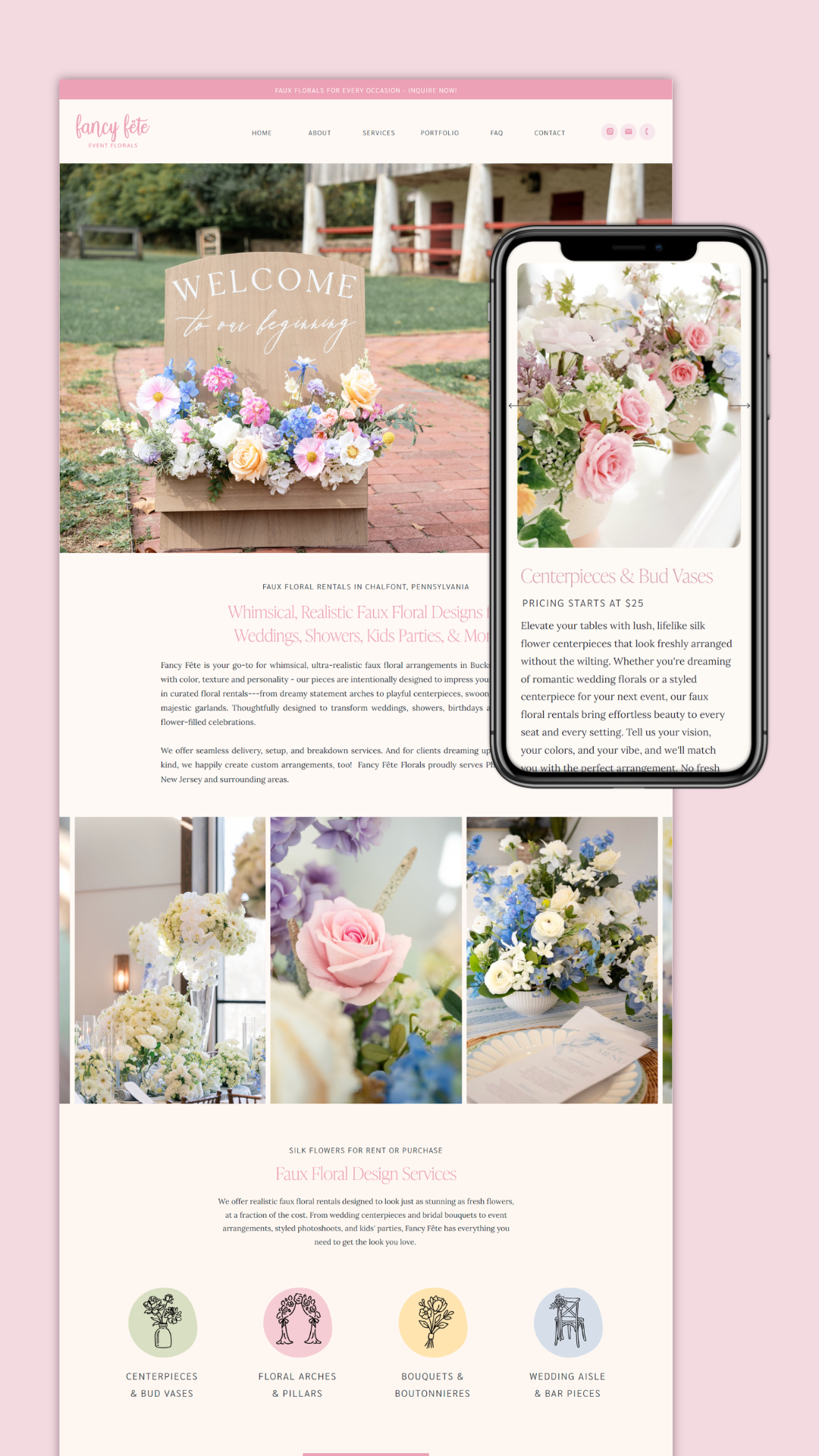
- Your online presence doesn’t match your skill level. Your arrangements are luxury, but your website looks like a weekend project.
- You’re invisible to the clients who can afford you. If you don’t rank on Google, the couples and corporate planners with real budgets never find you.
- You’re competing on price because nothing else is visible. When a client can’t see your process, your story, or your results, price is the only thing left to compare.
None of those are talent problems. They’re positioning problems, and positioning gets fixed online.
What Do Premium Clients Look For Before They See Your Pricing?
Clients with bigger budgets do more research, not less. Before a luxury bride or a corporate event planner ever fills out your contact form, they’ve already decided whether you belong in their price range.
They’re looking for:
- A polished, professional website. Not a linktree. Not a Facebook page. A real site that loads fast and looks intentional.
- Proof you’ve done work at their level. Galleries of full installations, not just single bouquet close-ups.
- Clarity about your process. Premium clients pay for certainty. A clear inquiry-to-delivery process reads as experience.
- Signals of demand. Testimonials, recognizable venues, and press mentions all say “this studio books out.”
When those signals are missing, the client fills in the blanks with a lower number. When they’re present, a higher quote feels expected instead of shocking.
How Does Your Website Justify Higher Prices?
Think about the last time you paid more for something without blinking. Chances are, everything about the experience told you the price was fair before you saw the number.
Your website does the same job. Here’s how each piece supports a floral designer charging more:
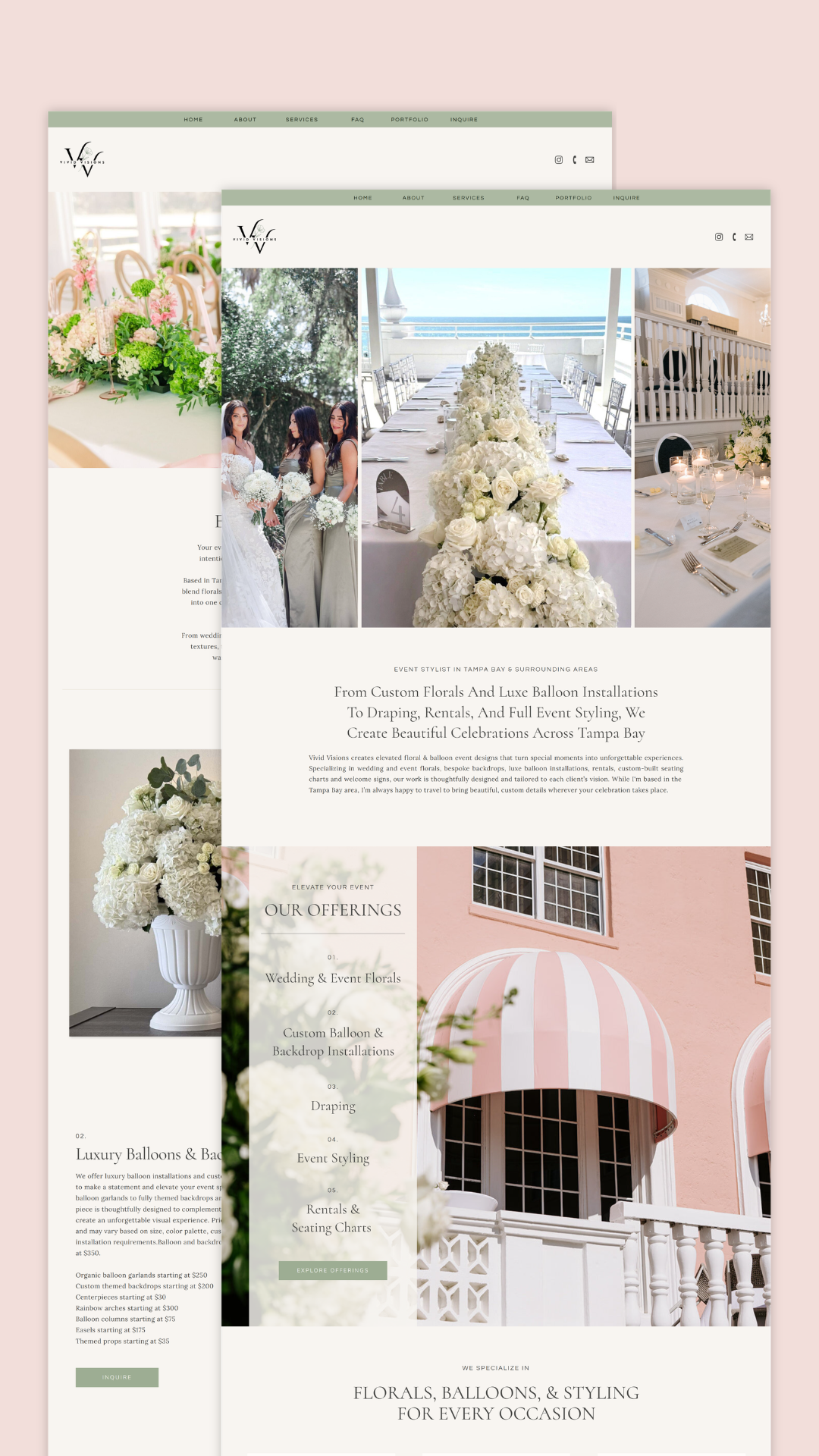
- Design quality sets the anchor. A custom-feeling Showit site signals an established studio. A cramped template with stock photos signals a side hustle.
- Copy speaks to the right client. “Affordable flowers for any budget” attracts bargain hunters. “Full-service floral design for weddings and corporate events” attracts planners with real budgets.
- SEO controls who finds you. Ranking for searches like “luxury wedding floral designer” in your city puts you in front of people already primed to pay premium rates.
- Structure builds trust with AI search too. ChatGPT and Google’s AI Overviews now recommend vendors, and they favor sites with clear services, real locations, and organized content. That’s another door premium clients walk through.
I wrote more about how this works in SEO for floral designers: how to show up on Google and ChatGPT, if you want the deeper breakdown.
Why Does Instagram Alone Keep Your Prices Down?
Here’s an opinion I’ll stand behind every time: Instagram doesn’t replace a website. A big following looks impressive, but likes don’t sign contracts, and the clients who pay the most aren’t scrolling to find you. They’re searching.
One of my clients, Dreamsc8pe Event Co., launched her website about six months ago. She doesn’t have a massive Instagram following. But Nike reached out to her because they found her on Google. Not through a viral reel. Not through a hashtag. Through search.
That’s what premium buyers do. Brands, corporate planners, and high-budget couples treat Google as their vendor directory. My clients have booked Nike, Sephora, Netflix, Amazon, and professional sports teams this way, and none of it depended on follower counts.
Instagram is a portfolio teaser. Your website is the sales conversation. If you only have the teaser, you’ll keep attracting clients who negotiate like they’re at a flea market.
Where Should You Start If You Want to Raise Your Prices This Year?
You don’t have to overhaul everything at once. Here’s the order I’d tackle it in:
- Get a website that matches your work. If you want it done fast, my Showit templates are the DIY starting point, and The Party Planner adapts beautifully for floral studios. If you’d rather hand it off, Website in a Week gets you a fully customized template site in 5 to 7 business days, with the complete SEO Accelerator included.
- Fix your SEO foundation. The SEO Accelerator is a one-time, done-for-you setup: six pages of optimization, competitor analysis, five geo-targeted landing pages, keyword research, and a Google Business Profile audit. It’s included in Website in a Week, the Signature Offer, and the Custom Website package.
- Update your copy to speak premium. Cut anything that sounds apologetic about price. Lead with outcomes and experience.
- Then raise the number. With positioning in place, a price increase reads as confidence, not greed.
And if you’re wondering how this connects to booking bigger events, I broke that down in how to book luxury weddings as a floral designer.
FAQ: Charging More as a Floral Designer
How do I know if my prices are too low?
If you’re booked solid but still stressed about money, your prices are too low. Fully booked at exhausting volume is the clearest sign the market would pay you more.
Will a new website really help a floral designer charge more?
Yes, because it changes who finds you and what they expect to pay. A premium site attracts inquiries from clients who budget for full-service floral design instead of price shopping.
How long does SEO take to bring in higher-budget inquiries?
Months, not days. Anyone promising a #1 ranking in 30 days is lying to you. A strong foundation starts compounding within a few months, and the inquiries it brings tend to be better qualified from day one.
Do I need a big Instagram following to charge premium prices?
No. The clients with the biggest budgets search Google, and increasingly ask ChatGPT for vendor recommendations. A website that ranks matters far more than follower count.
Can I just raise my prices without changing anything else?
You can, but expect pushback if your online presence still signals budget-friendly. Raise your positioning first and the price increase will stick.
Ready to build the kind of online presence that makes your next price increase feel obvious? Start with a template from the shop, or reach out about Website in a Week and get a fully customized Showit site, complete SEO Accelerator included, in 5 to 7 business days. Payment plans are available on every package.
One honest note: if you’re looking for the cheapest possible option or a site thrown together overnight, I’m not your designer. This work is for floral designers who are ready to invest in a real foundation and charge like the professionals they already are.


X