
How to Get Your Event Planning or Balloon Business Recommended by ChatGPT and AI Search
AI Search Is Changing How Clients Find Balloon Artists and Event Planners
Something is shifting in the way people find local businesses like balloon businesses and event planners. Instead of scrolling through Google results and clicking link after link, more and more potential clients are opening ChatGPT, Google Gemini, or another AI tool and just asking a question.
Questions like:
- “Who is the best balloon artist in Tampa?”
- “Can you recommend an event planner near me for a kids’ birthday party?”
- “What event decorator in Dallas does luxury weddings and corporate events?”
When someone asks an AI tool a question like that, it does not show a list of 50 results. It picks a handful of businesses that best match the request. That is a massive opportunity if you are one of the businesses it recommends, and a massive problem if you are not.
The good news? Most event planners and balloon artists have not even started thinking about this. Which means right now is the perfect time to get ahead.
This post breaks down exactly what AI search tools look for, how it connects to the SEO work you may already be doing, and what specific steps you can take to start showing up when potential clients ask AI to find someone like you.
In This Post
- AI Search Is Changing How Clients Find Balloon Artists and Event Planners
- Traditional SEO and AI Search Are Connected, But Not the Same
- Where AI Search Is Different
- A Step-by-Step Guide to Getting Your Event Planning or Balloon Business Recommended by AI
- Where This Leaves You
- Frequently Asked Questions
This is the kind of work that feels slow while you are doing it and obvious six months later. If you want this handled, let’s work together. And if you just want to watch for a while first, Instagram @daydreamsites is where I post the work. I cannot wait to see what you build!
Traditional SEO and AI Search Are Connected, But Not the Same
If you have been investing in SEO for event planners or SEO for balloon artists, you are already ahead of most of your competition. A lot of what helps you rank on Google also helps AI tools understand and recommend your business.
Things like:
- Clear, helpful content on your website that answers real questions
- Service pages that describe exactly what you do and where you do it
- A complete Google Business Profile with accurate details
- Client reviews and testimonials that mention your services and location
- A well-structured website with proper headings, meta titles, and descriptions
All of that still matters. But AI search adds a few new layers on top.
Where AI Search Is Different
It Needs to Categorize You Quickly
Google shows pages of results and lets the user sort through them. AI does not have that luxury. It has to narrow it down to a few businesses that match what the person is asking for.
That means AI needs to understand exactly what you do, who you do it for, and where you are located. If your website is vague about any of those things, AI will skip over you and recommend someone who is clearer.
If your homepage says “We create beautiful events and experiences,” that tells AI almost nothing. But if it says “Luxury balloon installations and event styling for weddings, corporate events, and milestone celebrations in the Houston area,” now AI has something to work with.
It Looks Beyond Your Website
AI does not just read your website and call it a day. It looks at what other people and other websites say about you. Reviews, directory listings, vendor features, blog mentions, social media profiles. All of these external signals help AI build a picture of who you are and how credible your business is.
Think of it like this: your website is your resume, but external mentions are your references. AI wants both.
It Values Structure Over Style
Your website can still be gorgeous and on-brand. But the actual text needs to be organized in a way AI can easily parse. That means proper heading structure (H1, H2, H3), FAQ sections on your service pages, clear descriptions of what is included in each package, and straightforward language about your process.
This is one reason a well-built Showit website template matters so much. A colorful Showit website template can absolutely look stunning while also being structured in a way that helps both Google and AI understand your content. Design and SEO do not have to compete with each other.
A Step-by-Step Guide to Getting Your Event Planning or Balloon Business Recommended by AI
1. Get Crystal Clear on Your Positioning
Write out your positioning statement using this format:
“I am a [specialty] for [client type] in [location].”
Examples:
- “I am a balloon artist specializing in organic garland installations for weddings and luxury events in South Florida.”
- “I am an event planner for milestone birthdays, baby showers, and styled celebrations in the DFW area.”
Use this exact type of language on your homepage, your About page, your Instagram bio, and your Google Business Profile. Consistency across platforms helps AI connect the dots.
2. Write Service Pages That Answer Real Questions
Each service you offer should have its own dedicated page. Not just a gallery of pretty photos (although those help), but actual written content that explains what the service includes, who it is for, what the process looks like, and where you provide it.
For a balloon artist, that might look like:
- A page for wedding installations with details about garlands, backdrops, ceiling treatments, and organic designs
- A page for corporate events covering branded balloon displays, ribbon cuttings, and large-scale installations
- A page for birthday parties describing arches, columns, balloon walls, and themed setups
For an event planner:
- A page for full-service planning with your process from consultation to day-of coordination
- A page for partial planning or month-of coordination
- A page for styled celebrations covering birthdays, baby showers, or holiday events
Each page should include an FAQ section that answers the questions your ideal clients actually ask. Things like pricing ranges, travel radius, booking timelines, and what to expect.
3. Create Content That Proves Your Event Expertise
Blog posts are one of the most powerful tools for both SEO for event planners and AI visibility. When you write in-depth content that answers specific questions, you give AI tools more information to pull from when recommending businesses.
Strong blog topics for balloon artists and event planners:
- “How Much Does a Balloon Garland Cost? A Realistic Pricing Guide for 2026”
- “5 Questions to Ask Before Hiring an Event Planner for Your Wedding”
- “What Is the Difference Between Organic and Classic Balloon Decor?”
- “How to Choose a Color Palette for Your Event That Photographs Beautifully”
- “Why Local SEO Matters More Than Instagram Followers for Booking Clients”
These are the kinds of questions people are literally typing into ChatGPT. When your blog post is the one that answers them thoroughly, AI takes notice.
4. Strengthen Your Local Search Presence
For service-based businesses like event planners and balloon artists, local search is everything. AI tools lean heavily on local signals when recommending businesses for location-based queries.
What to do:
- Claim and fully complete your Google Business Profile with your service area, hours, photos, and website link
- Make sure your business name, address, and phone number are consistent everywhere (website, Google, directories, social media)
- Include your city and service area on every service page, ideally in the main heading
- Write location-specific content like “Best Venues for Balloon Installations in [City]” or “Event Planning Tips for Outdoor Weddings in [Region]”
- Ask happy clients to leave Google reviews that mention your services and location
- Get listed in local vendor directories, venue preferred vendor lists, and industry-specific platforms
Every one of these signals helps both Google and AI connect your business to your area.
5. Build Authority Outside Your Website
AI looks for external proof that your business is legitimate and respected. The more places it finds your name mentioned in a positive context, the more confident it feels recommending you.
Ways to build that authority:
- Get featured on venue preferred vendor lists
- Collaborate with other vendors (photographers, florists, caterers) and cross-link websites
- Submit your work to styled shoot publications or event industry blogs
- Join and get listed in industry associations and local business directories
- Share testimonials and case studies on your site that reference specific venues, event types, and locations
You do not need to be famous. You just need a consistent trail of credible mentions that AI can find.
6. Make Sure Your Website Is Built to Perform
This is where your foundation matters. A fun Showit website template designed for your industry gives you a head start because the structure, layout, and SEO framework are already baked in.
Whether you are using a balloon artist website template or an event planner website template, the key is making sure your site has:
- One clear H1 heading per page that describes what the page is about
- Proper H2 and H3 subheadings throughout your content
- Meta titles and descriptions on every page
- Alt text on all images (describe what is in the photo, not just “IMG_4532”)
- Fast load times and mobile-friendly design
- Clear calls to action that guide visitors to inquire or book
A colorful Showit website template gives you the visual impact your brand needs while keeping the technical structure that search engines and AI tools require. That combination is what actually gets you found and gets you booked.
7. Keep Your Website Active and Updated
Both Google and AI favor websites that show signs of life. A site that has not been touched in two years sends a signal that the business may not be active.
Simple ways to keep your site fresh:
- Add new portfolio images from recent events
- Update your packages and pricing as they change
- Publish a new blog post at least once a month
- Refresh your testimonials with recent client reviews
- Update your FAQ sections as you notice new questions coming in
These small updates compound over time and show search engines and AI tools that your business is active, relevant, and worth recommending.
8. Common Mistakes That Hurt Your AI Visibility
A few things to watch out for:
Vague positioning. If your website says you do “events, parties, weddings, corporate, and more,” AI cannot categorize you. Pick your primary niche and lead with it. You can still offer other services, but your positioning needs a clear anchor.
No written content. A website full of beautiful photos but very little text gives AI almost nothing to work with. You need words on the page that describe what you do, who you serve, and where.
Ignoring your Google Business Profile. This is one of the strongest local signals for both Google and AI. If yours is incomplete or outdated, you are leaving visibility on the table.
Only relying on Instagram. Instagram is incredible for building trust and showcasing your work. But it is not searchable the way your website is. SEO for balloon artists and SEO for event planners is what brings in clients who are actively searching for someone to hire right now. Instagram warms them up. Your website closes the deal.
No external mentions. If your business only exists on your own website and Instagram, AI has limited evidence to trust you. Build that external presence through directories, vendor lists, collaborations, and features.
Where This Leaves You
AI search is not replacing Google. It is adding a new layer on top of it. The businesses that show up in both traditional search results and AI recommendations are going to have a serious advantage over the next few years.
The foundation is the same: a clear message, a well-structured website, strong SEO, and proof that real people trust your business. If you already have a professional website built on a Showit website template with solid SEO behind it, you are closer than you think.
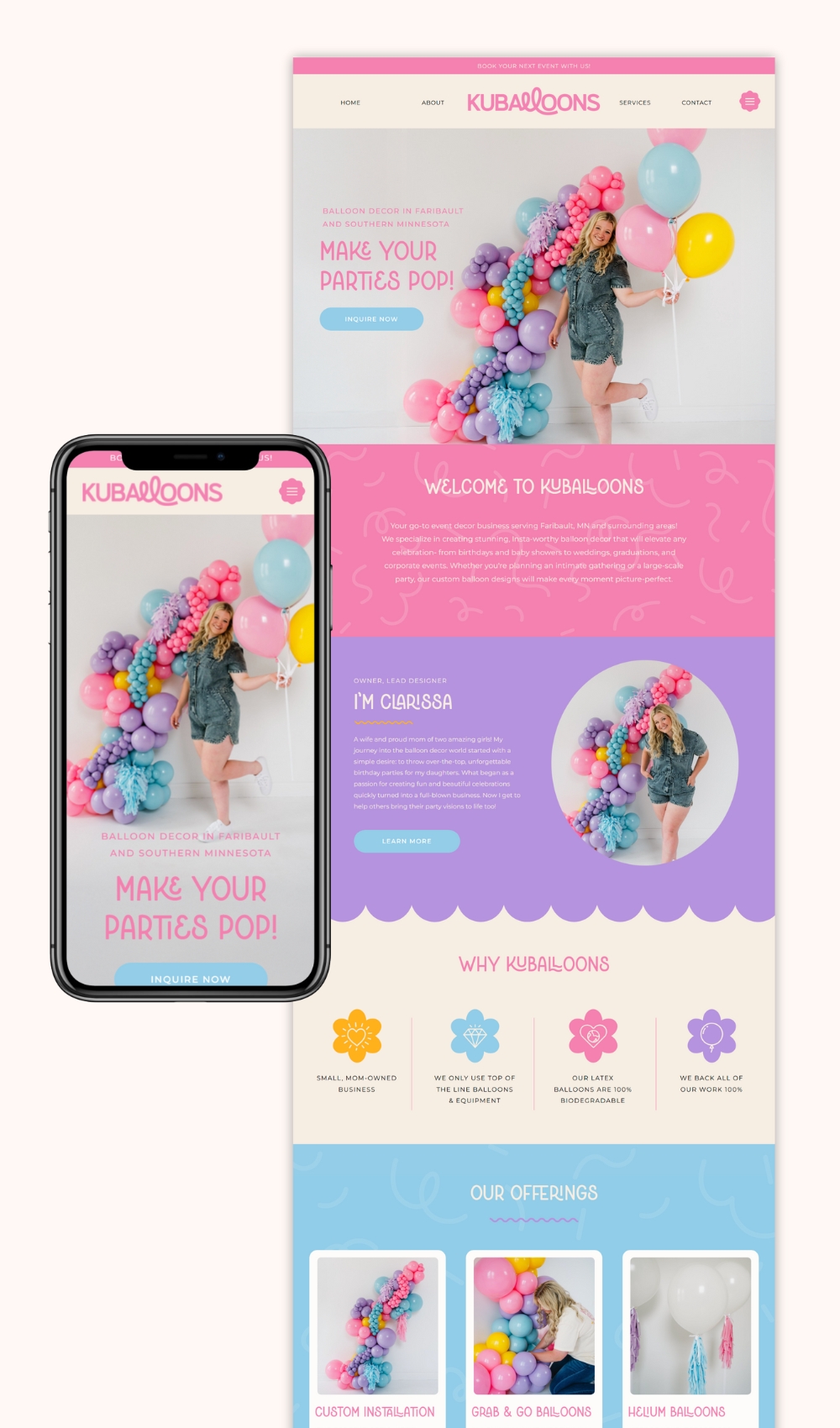
And if you do not have that foundation yet? That is exactly what we build at Daydream Sites. From colorful Showit website templates designed specifically for event planners and balloon artists, to done-for-you SEO that gets you ranking on Google, Google Maps, and now AI search tools like ChatGPT.
Your next client might not Google you. They might ask ChatGPT to find you. Make sure it knows your name.
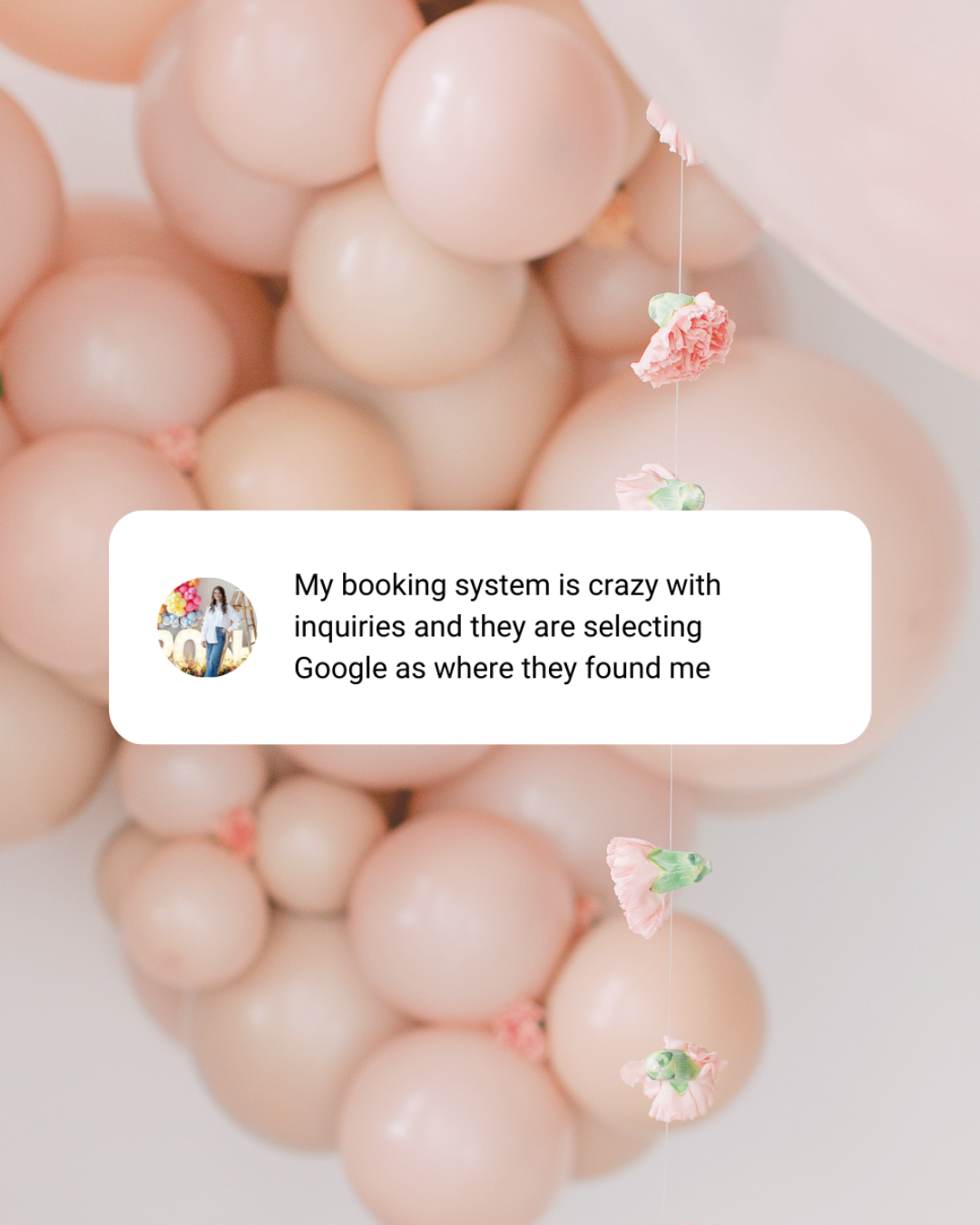
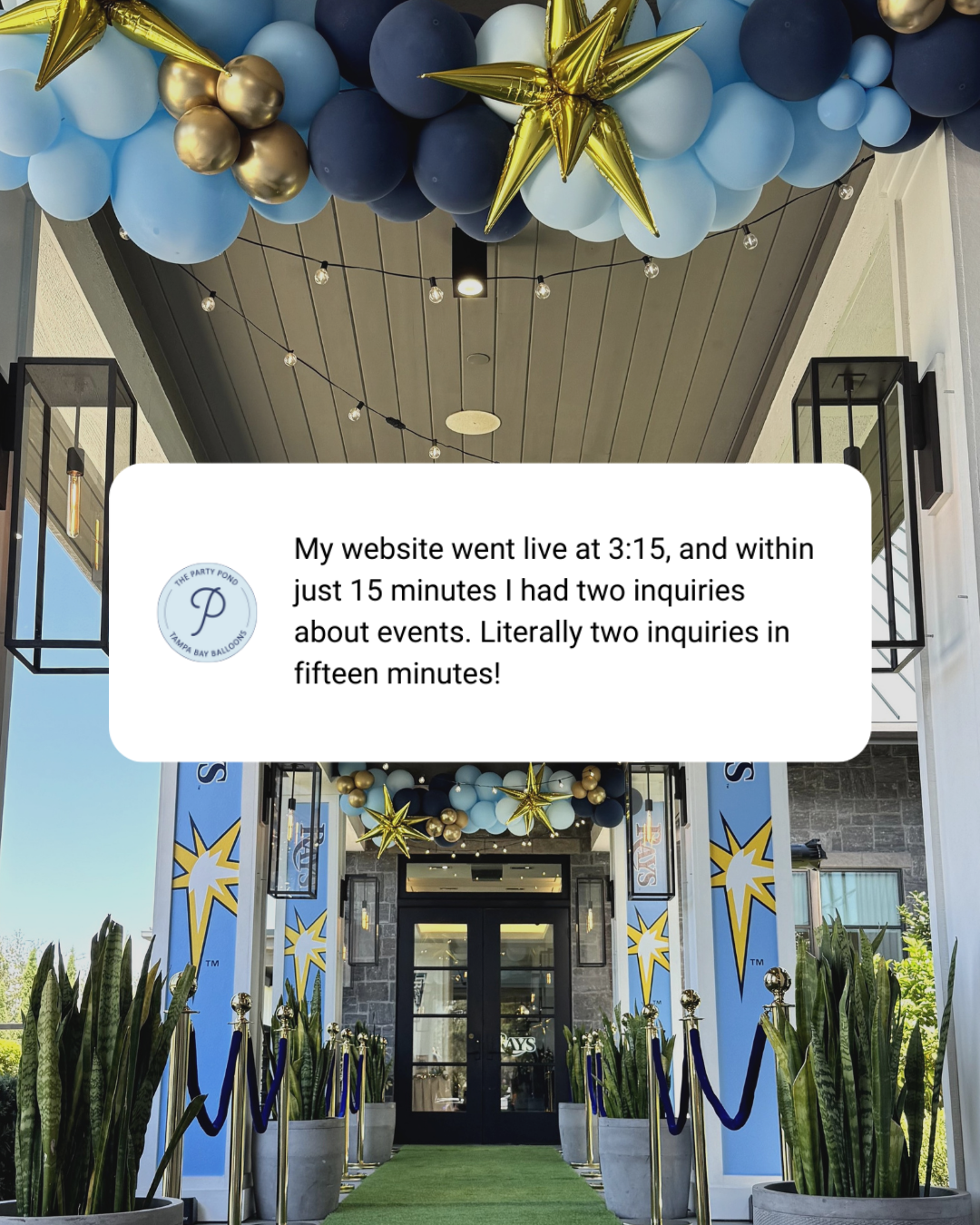
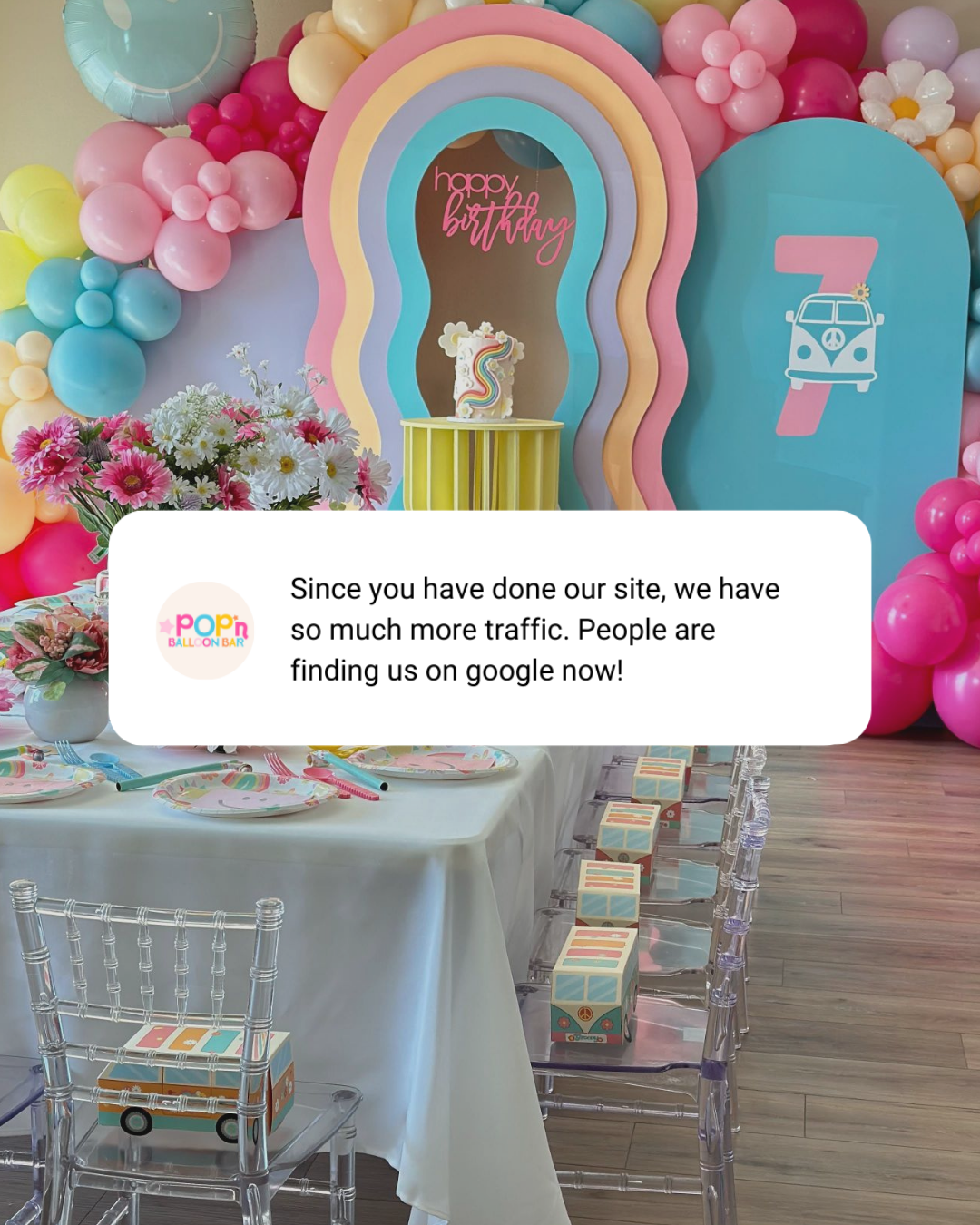
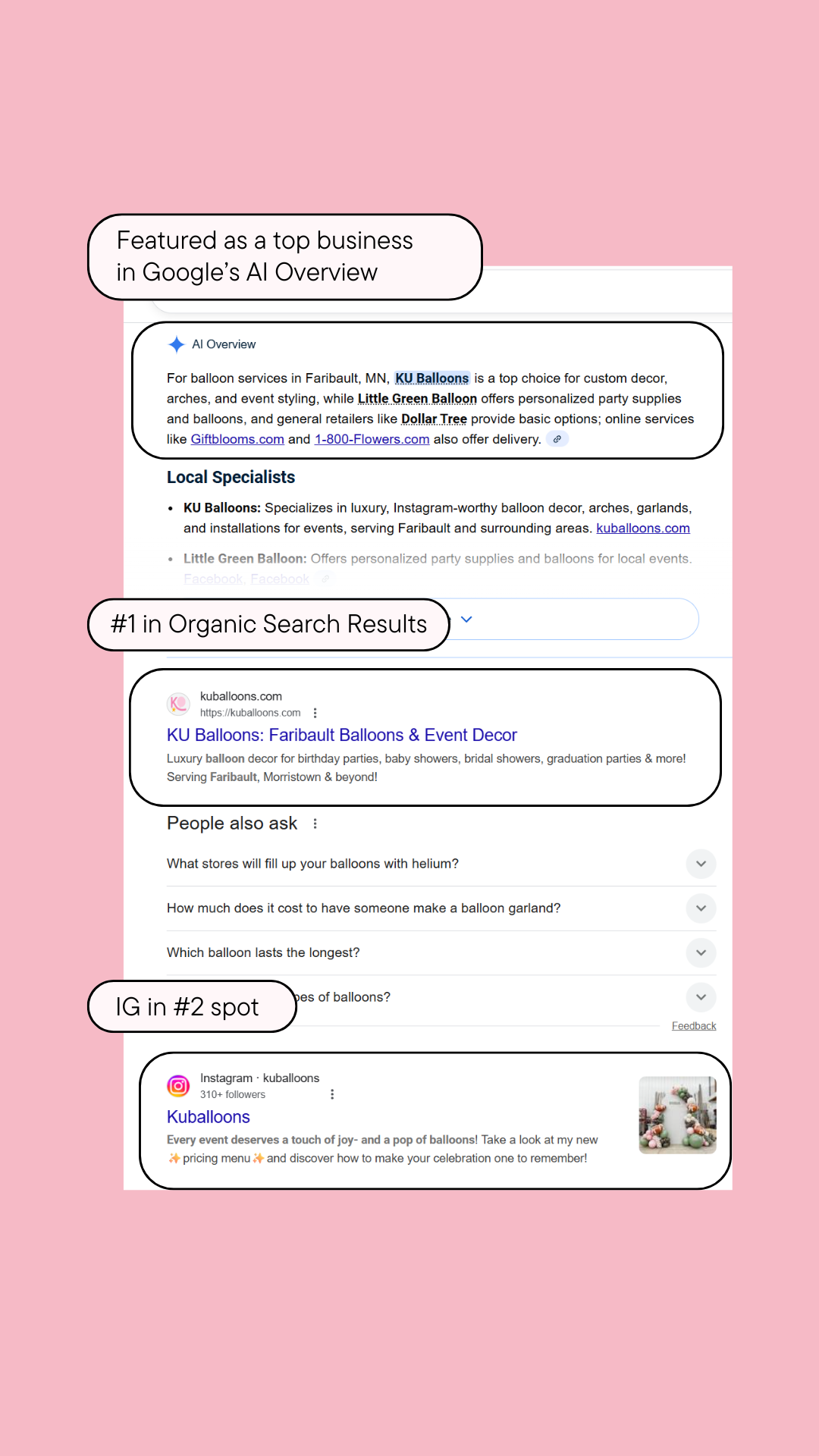
Check out one of our Website in a Week clients, dominating the search results in her town!
Frequently Asked Questions
Can ChatGPT really recommend my event planning or balloon business?
Yes. ChatGPT, Google AI Overviews, and other AI tools pull from indexed web content to generate recommendations. If your website has strong SEO, clear service descriptions, genuine local content, and consistent information across the web, you give yourself a real shot at being recommended when someone asks for services in your area, though no site can guarantee it.
What is GEO and how is it different from SEO?
GEO stands for Generative Engine Optimization. While SEO focuses on ranking in traditional search results, GEO focuses on getting your business cited by AI-powered search tools like ChatGPT, Perplexity, and Google AI Overviews. The good news is that strong SEO is the foundation of GEO. If your website is well-structured, keyword-rich, and authoritative, AI tools are more likely to reference you.
Do I need to be on ChatGPT specifically to get recommended?
You do not need a ChatGPT account or listing. ChatGPT pulls from publicly available web content. Your job is to make sure your website, Google Business Profile, and online presence are so clear and well-optimized that AI tools naturally find and cite you.
How long does it take to start showing up in AI search results?
It depends on your starting point. If you already have solid SEO and a well-structured website, you could start appearing in AI citations within weeks of optimization. If you are starting from scratch, expect 3 to 6 months of consistent effort before AI tools begin referencing your business regularly.
Is SEO still worth it if AI is changing how people search?
Absolutely. SEO is more important than ever because AI tools rely on well-optimized, authoritative content to generate their answers. The businesses that invest in SEO now are the ones AI will recommend. Skipping SEO means being invisible in both traditional search and AI search.
View comments
+ Leave a comment
|